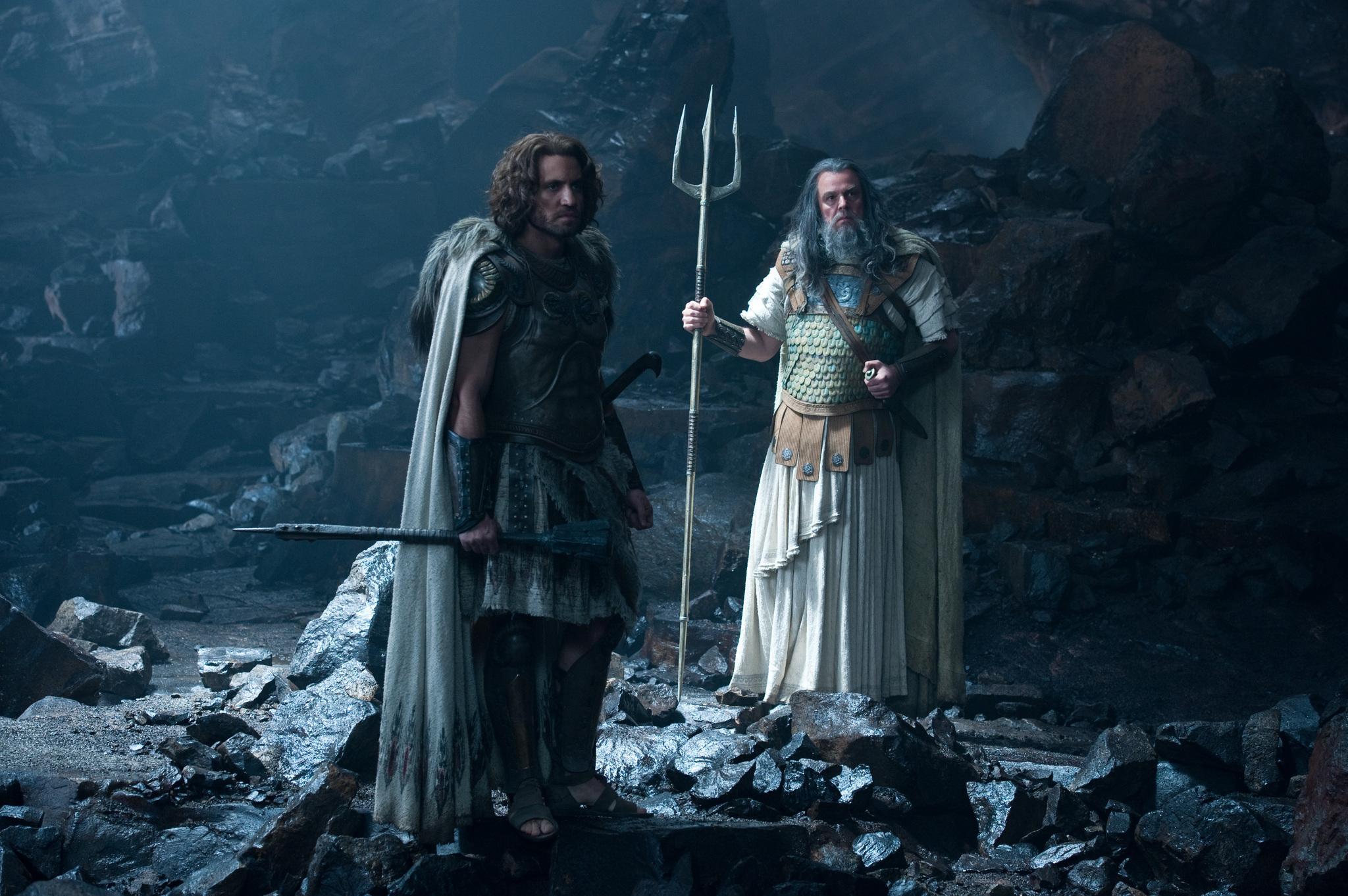
You know that feeling. You just finished watching Sam Worthington scream at a giant lava monster and now you’re itching for more. There is something uniquely satisfying about watching a demigod punch a mountain-sized creature in the face. It's the scale. The "sand and sandals" vibe. The way the gods treat the earth like their personal chessboard while humans just try not to get stepped on.
But here is the thing about finding movies like Wrath of the Titans. Most recommendation engines just spit out generic "fantasy" lists. They’ll tell you to watch The Lord of the Rings. Look, we all love Frodo, but that’s not the same itch. You aren't looking for a 12-hour hike through New Zealand. You want monsters. You want Greek tragedy turned into a billion-dollar special effects firework show. You want divine family drama.
Let’s be honest: Wrath of the Titans and its predecessor Clash of the Titans (2010) weren't exactly Oscar bait. Critics hammered them. But for fans of the genre, they are essential. They captured a specific "Maximalist Mythology" that is actually pretty hard to find.
The Visual Powerhouses: Immortals and 300
If you liked the "look" of the Titans movies—the high-contrast, sweaty, golden-hued violence—then Immortals (2011) is your first stop. Directed by Tarsem Singh, this movie is basically a moving Renaissance painting if the painter was obsessed with brutal execution scenes.
It follows Theseus (played by a pre-Superman Henry Cavill) as he fights King Hyperion (Mickey Rourke). Hyperion wants to release the Titans—sound familiar? While Wrath used a lot of brown and grey, Immortals is vibrant. The gods wear ridiculous golden armor that honestly looks like it belongs on a high-fashion runway, but it works. The fight in the salt mines at the end is one of the most visually creative battles in the last twenty years.
Then there is 300 (2006). You've seen it. You've heard the memes. But if you haven't revisited it lately, it’s worth noting how much it influenced the modern "myth" aesthetic. It’s less about gods and more about legendary men, but the "monster" elements are there. The Uber-Immortal, the executioner with blades for arms, the giant elephants—it’s all part of that same DNA.
When God-Sized Monsters Are the Only Thing That Matters
Sometimes you don't actually care about the Greek names. You just want the scale. You want to see something so big it makes a skyscraper look like a toothpick.
Godzilla: King of the Monsters (2019) is surprisingly similar to Wrath of the Titans in its core structure. Think about it. You have ancient, "divine" beings (Titans, literally) waking up to reclaim the earth. You have a human protagonist caught in the middle of a family feud between giant entities. Replace Zeus with Godzilla and Kronos with King Ghidorah, and you’re basically watching the same movie.
If you want more of that specific "colossal creature" energy:
- Kong: Skull Island (2017): This one has the best "sense of scale" of the modern monster movies. When Kong stands up behind the trees, you feel it.
- Pacific Rim (2013): Guillermo del Toro’s love letter to giant things. It’s robots vs. monsters, but the weight of the combat feels very similar to Perseus fighting the Chimera.
- Gods of Egypt (2016): Okay, hear me out. This movie is wild. It is a fever dream of gold blood, giant scarabs, and gods that grow to 12 feet tall whenever they’re angry. It’s "so bad it's good" for some, but for fans of Wrath, it’s a direct cousin. It doesn't take itself seriously, and the creature designs are genuinely creative.
The "Old School" DNA: Harryhausen’s Legacy
You cannot talk about movies like Wrath of the Titans without mentioning the man who started it all: Ray Harryhausen. Before CGI, we had stop-motion.
The original Clash of the Titans (1981) is mandatory viewing. Yes, the Kraken looks a bit like a rubber toy now, and Medusa moves a little jankily, but there is a soul in those puppets that CGI often misses. It’s the same story—Perseus, the Pegasus, the mechanical owl—but told with a sense of wonder that felt legendary rather than just "action-packed."
Jason and the Argonauts (1963) is arguably even better. The skeleton fight at the end? Absolute peak cinema. When the bronze giant Talos turns his head with a metallic screech, it’s genuinely creepier than anything in the 2012 Wrath sequel. These movies are the blueprint. Without them, we don't get Sam Worthington in a leather skirt.
The Modern Spin: Percy Jackson and Wonder Woman
If you want something a bit more "approachable" or modern, you head toward the superhero and YA side of things.
Wonder Woman (2017) is actually the best "Greek God" movie of the 21st century. It treats the mythology with more respect than almost any other blockbuster. The opening on Themyscira feels like a high-budget version of the Olympus scenes we never got enough of in Wrath. And the final showdown with Ares? It’s pure divine warfare.
Then there’s the Percy Jackson franchise. The movies (2010 and 2013) were... divisive. If you’re a fan of the books, they might hurt your soul. But as standalone "monsters in the modern world" movies, they’re fun. Sea of Monsters has some great creature work, including a Charybdis that feels very much in line with the scale of the Titans films.
Why We Still Watch These (Despite the Reviews)
People often mock these movies for being "dumb." I think that’s a misunderstanding of what they’re trying to do. Greek myths weren't meant to be quiet, subtle dramas. They were loud. They were violent. They were about ego and massive consequences.
Wrath of the Titans succeeded because it understood that Kronos should be a walking volcano. It understood that the underworld should feel like a shifting, impossible labyrinth. We watch these because they satisfy a primal need for "Epic" with a capital E.
Actionable Next Steps for Your Watchlist
If you’re staring at your streaming queue right now, here is how to pick your next move:
- For the Visuals: Start with Immortals. It’s the closest "vibe" match to Wrath.
- For the History: Go back to the 1963 Jason and the Argonauts. It’s only 104 minutes long and moves faster than most modern movies.
- For the Scale: Watch Godzilla: King of the Monsters. Just skip the human dialogue and wait for the monsters to roar.
- For the "Hidden Gem": Try The Odyssey (1997) miniseries. It’s longer and more grounded, but Armand Assante plays a fantastic Odysseus and the creature effects by Jim Henson's Creature Shop are top-tier for the time.
Honestly, the "sword and sandal" genre is a bit of a dying breed in the 2020s. We get plenty of superheroes, but rarely do we get gods. So, cherish the ones we have. Even the ones where the lead actor refuses to change his buzzcut for a period piece.