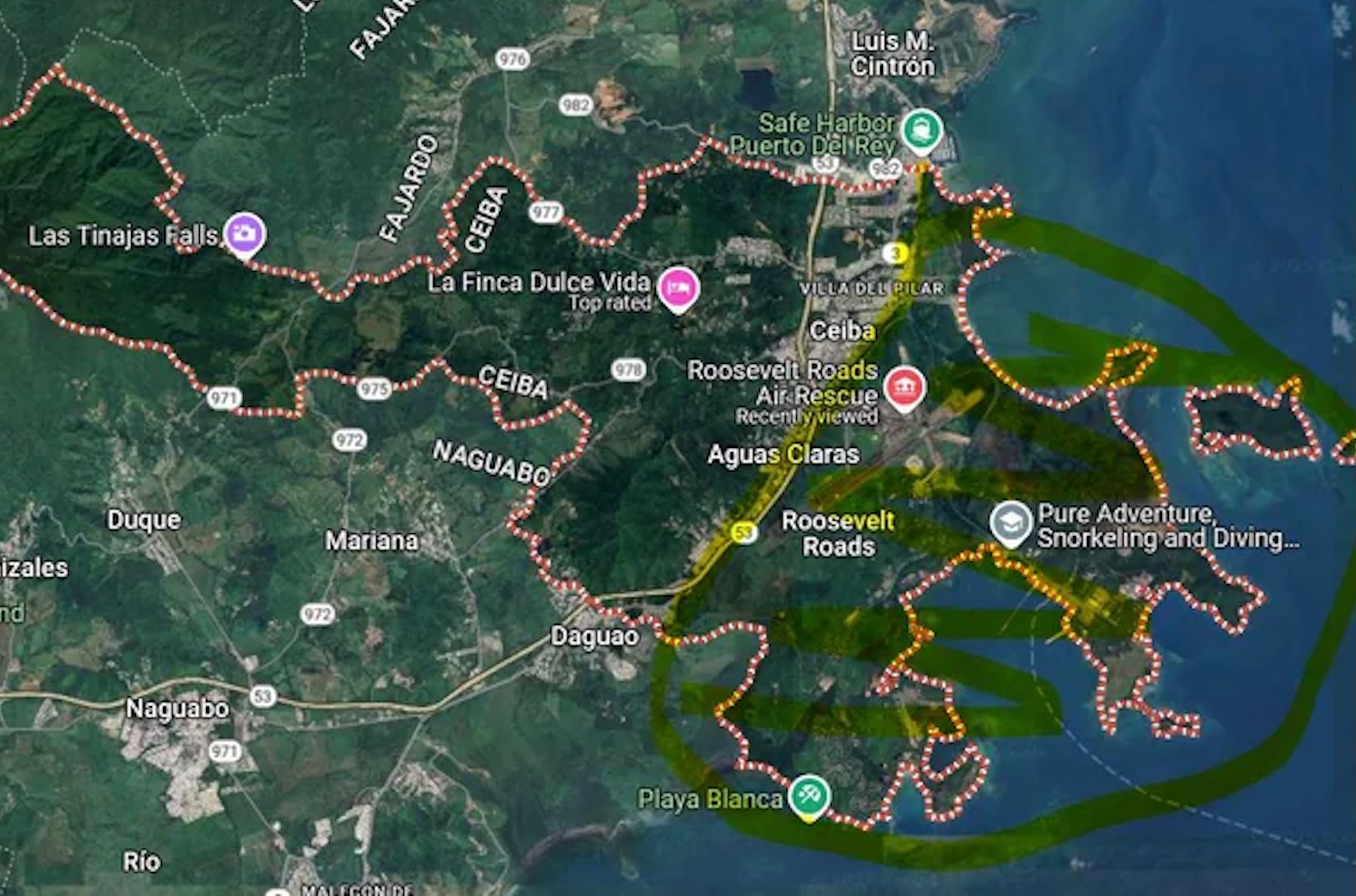
If you drive down to Ceiba on the eastern tip of Puerto Rico, you’ll eventually hit a gate that feels like the entrance to a lost world. This is Roosevelt Roads. Or, as the locals call it, Rosie Roads.
For over 60 years, this place was the "Pearl of the Fleet," a massive U.S. Navy station that pumped hundreds of millions of dollars into the local economy. Then, in 2004, the Navy just... left. They packed up their ships, their families, and their paychecks, leaving behind a 9,000-acre concrete skeleton that has been at the center of a tug-of-war ever since.
People have been promising a "rebirth" for two decades. You’ve probably heard the rumors: a world-class marina, a Disney-style theme park, even a spaceport. But if you walk the grounds today, you’re more likely to see wild horses and crumbling barracks than a luxury resort.
Honestly, the story of Roosevelt Roads is kinda heartbreaking, mostly because it’s a masterclass in how slow-moving bureaucracy can kill a goldmine. But things are finally shifting in 2026.
The Reawakening: Is the Military Coming Back?
The big talk right now in Ceiba isn’t about hotels. It’s about the boots on the ground.
In late 2025, the U.S. military quietly reactivated parts of the old base. We aren't talking about a full-scale reopening of the entire 8,000-plus acres, but the José Aponte de la Torre Airport (NRR) is humming again. The Puerto Rico Ports Authority basically signed a deal—worth about $5 million—to let the military use the airfield as a strategic hub.
Why now? It’s mostly regional tension. With instability in Venezuela and a need for a "staging ground" in the Caribbean, the Pentagon realized they missed having a massive 11,000-foot runway in this part of the world.
Last November, people started spotting F-35 Lightning II fighters and heavy transport planes on the tarmac. It’s a weird vibe for the locals. On one hand, the military brings money. On the other, many remember the massive protests that led to the Navy leaving in the first place, specifically the controversy over bombing ranges in nearby Vieques.
What’s Actually There Right Now?
If you visit Roosevelt Roads today, don’t expect a polished tourist destination. It’s a mix of active utility and eerie abandonment.
- The Airport: This is the most "alive" part. It serves as the main gateway for the ferry system to Vieques and Culebra. It’s also where the recent military activity is centered.
- The Marina: There is a functioning marina, and it’s actually one of the best jumping-off points for sailors heading to the Spanish Virgin Islands.
- The "Green Belt": About 3,400 acres were handed over to the Department of Natural and Environmental Resources. This area is stunning—mangroves, lagoons, and actual wildlife that has reclaimed the land.
- The Ruins: The hospital, which used to be one of the best in the Caribbean, is now a gutted shell. The same goes for the old bowling alley and housing units. Scavengers stripped the copper years ago.
The Spaceport Dream and the "Blue Economy"
One of the wildest things currently on the table is the Puerto Rico Spaceport.
The Local Redevelopment Authority (LRA) has been pushing to use a section called Punta Medio Mundo for vertical rocket launches. It sounds like sci-fi, but they’ve been talking to private aerospace companies about turning Ceiba into a tech hub.
Naturally, this has sparked a massive fight. Environmental groups and the Centro de Periodismo Investigativo have pointed out that Punta Medio Mundo is supposed to be a protected "Green Belt." Launching rockets next to endangered manatees and leatherback turtles isn't exactly "ecotourism."
There’s also the Marine Innovation Center project. This is part of the "Blue Economy" initiative aimed at using the deep-water port for ocean research and renewable energy. It’s a great plan on paper, but like most things at Rosie Roads, the funding has been a bit of a rollercoaster.
Why Development at Rosie Roads is So Slow
You’ve gotta wonder: how does a piece of land this valuable sit empty for 20 years?
It’s a mix of bad luck and bad management. Every time a new administration takes over in San Juan, the "Master Plan" for Roosevelt Roads gets a makeover. Projects that were greenlit by one governor get mothballed by the next.
Then there's the environmental stuff. Decades of military use left behind some nasty "gifts"—jet fuel in the soil, heavy metals, and unexploded ordnance. The EPA has been overseeing the cleanup for years, but you can’t build a luxury villa on a site that still needs remediation.
How to Visit (Legally)
You can actually go inside Roosevelt Roads, but don't just wander into the restricted military zones unless you want a very awkward conversation with a federal agent.
- The Ferry Terminal: If you’re heading to Vieques or Culebra, you’ll likely pass through the base to get to the Ceiba terminal.
- The Marina: You can book charters or store a boat at the existing facilities.
- Biking and Hiking: There are groups that organize tours through the natural areas. It’s basically the only way to see the "wild" side of the base safely.
Actionable Insights for Travelers and Investors
If you’re looking at Roosevelt Roads as more than just a curiosity, here is the ground reality for 2026:
- For Travelers: Don’t expect a resort. Go for the history and the raw, untouched coastline. Use the Ceiba ferry terminal as your hub, but take an extra hour to drive the perimeter roads. The contrast between the high-tech F-35s and the crumbling 1940s architecture is surreal.
- For Business/Investors: Keep a close eye on the LRA’s Request for Proposals (RFPs). The current pivot toward aerospace and military logistics is where the actual money is moving. The "luxury tourism" dream is still secondary to the base's strategic value.
- For History Buffs: Research the "Atlantic Fleet Weapons Training Facility" before you go. Understanding that this was once the nerve center for U.S. naval operations in the Atlantic makes the silence of the abandoned hangars hit much harder.
Rosie Roads isn't a "hidden gem" anymore—it’s a giant waking up from a very long nap. Whether it wakes up as a tourist paradise or a military stronghold is the $300 million question.
Current Status: Partially reactivated for military use; airport and marina operational; large-scale commercial redevelopment remains in the planning and environmental remediation phase.
Next Steps for Visitors: Verify ferry schedules at the Ceiba terminal and check for any temporary airspace or road closures due to ongoing military exercises before planning a day trip.