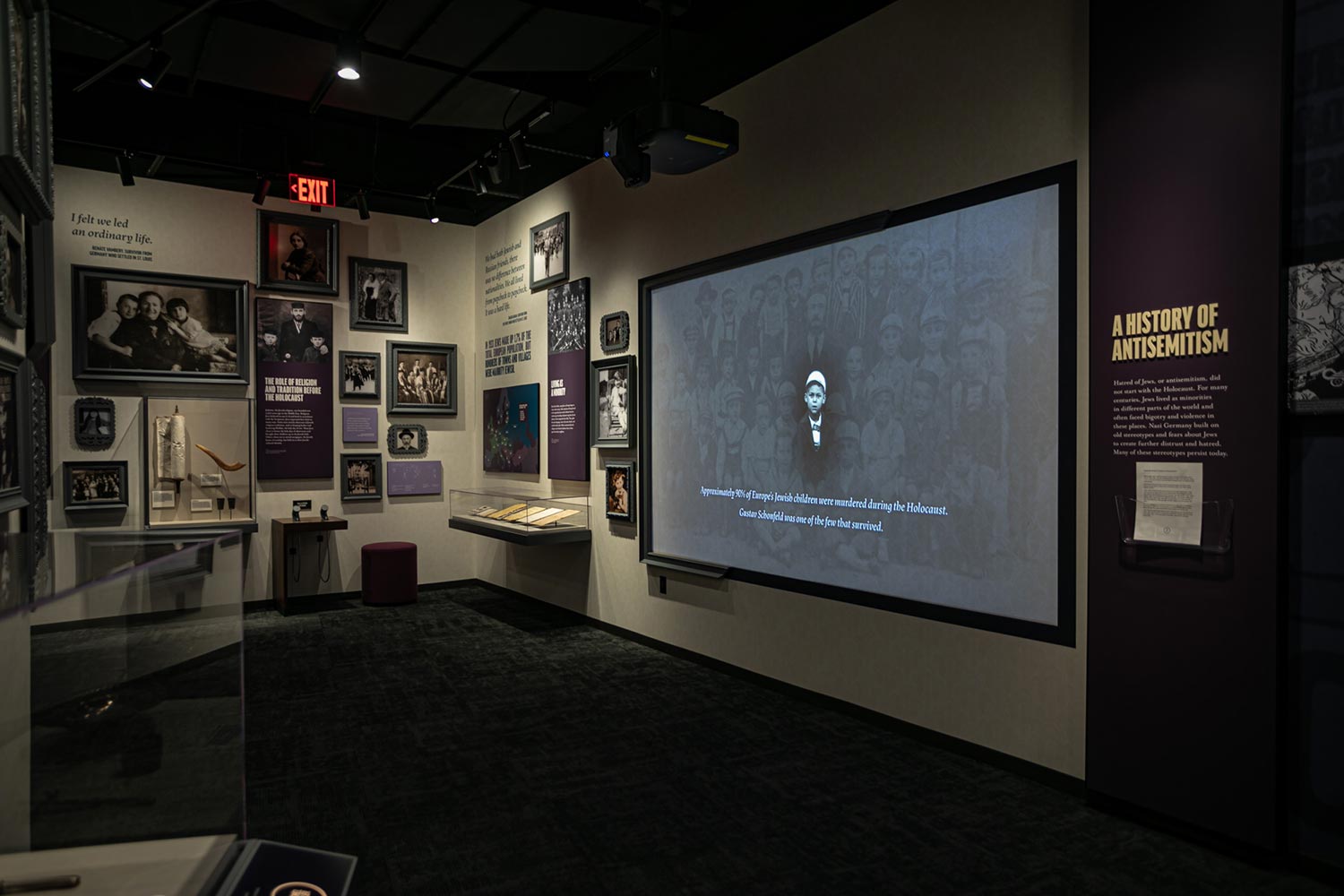
History isn’t always a straight line. Sometimes it’s a jagged, uncomfortable circle that brings you right back to questions you thought society had already answered. When you walk into the St. Louis Kaplan Feldman Holocaust Museum, you aren't just looking at black-and-white photos of a tragedy that happened thousands of miles away. You’re looking at St. Louis history. Specifically, the history of people who fled the unthinkable and decided to build a life in the Midwest.
It’s heavy. Of course it is. But there’s a specific kind of quiet in this building that feels different from a typical museum. It’s located in Creve Coeur, right off Schuetz Road, and it recently underwent a massive $21 million expansion. If you haven't been since 2022, you basically haven't seen the museum. The new space is roughly four times the size of the original.
Why the St. Louis Kaplan Feldman Holocaust Museum is Different
Most people expect a Holocaust museum to be a chronological list of horrors. While the timeline is there, this place focuses heavily on the "St. Louis Connection." This is a huge deal. You see, after World War II, about 1,000 survivors settled in St. Louis. They opened bakeries. They became tailors. They raised kids who went to Ladue or Parkway schools.
The museum isn't just about the "Final Solution" in a vacuum; it’s about the neighbors you didn't know were carrying these stories.
The Impact of Local Oral Histories
One of the most jarring things you’ll encounter is the audio. It’s one thing to read a textbook quote about the Nuremberg Laws. It’s another thing entirely to hear a recorded interview from a man who lived in University City for forty years, describing the exact moment he had to leave his home in Germany as a child.
The museum holds over 900 oral histories. That is a staggering amount of data. It’s also a lot of pain to process in one afternoon. Honestly, you probably can't do it all in one go. You shouldn't try to.
The storytelling here is nonlinear in a way that feels human. You’ll find the Impact Lab, which is a newer addition that hits pretty hard. It moves the conversation from "what happened then" to "what is happening now." It challenges visitors to look at contemporary issues—hate speech, systemic discrimination, and even the psychology of the "bystander."
Navigating the Permanent Exhibition
When you enter, you’re met with a heavy emphasis on the pre-war Jewish life. This is intentional. The curators want you to understand that the millions lost weren't just statistics. They were people with favorite songs, annoying siblings, and summer plans.
The transition into the rise of Nazism is subtle but terrifying. You see the propaganda. You see how the laws changed slowly, then all at once. It’s a lesson in how quickly "normal" can evaporate.
The Artifacts That Stay With You
It’s often the small things that get you. Not the large maps of the camps, but the personal items.
- A single shoe.
- A Torah scroll that was hidden.
- A transit visa signed by a diplomat who risked everything.
There is a particular focus on the S.S. St. Louis. If you aren't familiar with the story, it’s a dark chapter in American history. In 1939, this ship carrying over 900 Jewish refugees was turned away from Florida and forced back to Europe. Many of those passengers ended up in the camps. Seeing the documentation of that rejection while standing in the middle of Missouri is a gut-punch. It forces you to reckon with the fact that the "good guys" didn't always do the right thing when it mattered most.
The Architecture of Remembrance
The building itself is a statement. Designed by the firm TR, iota, and others, the architecture uses light and shadow to manipulate your mood. Some hallways are intentionally narrow and dark. Others open up into bright, airy spaces meant for reflection.
The Garden of the Righteous is a standout. It honors non-Jews who risked their lives to save Jewish people during the Shoah. It’s a necessary breath of air after the intensity of the main galleries. It reminds you that even in the absolute peak of human cruelty, there were people who chose to be brave. It sounds cliché, but when you’re standing there, it feels like a lifeline.
Misconceptions About the Experience
A lot of people think this is a "Jewish museum." That's a mistake. While it centers on the Jewish experience, the mission is universal. It’s about the fragility of democracy.
Another misconception? That it’s too dark for kids.
The museum actually has very specific guidelines for educators. They generally recommend the full experience for middle schoolers and up. For younger kids, the focus is usually on "upstander" behavior—teaching them how to speak up when they see someone being bullied or excluded. It’s about building empathy before the world has a chance to harden them.
What Most People Get Wrong
People often assume that because it's a "local" museum, it might be smaller or less "professional" than the United States Holocaust Memorial Museum in D.C.
They’re wrong.
The level of scholarship here is world-class. The archives are used by researchers globally. Because it is smaller than the D.C. museum, it feels more intimate. You aren't fighting a crowd of a thousand tourists to see an exhibit. You have space to breathe. To think. To cry if you need to, which happens more often than you’d expect in the middle of a Tuesday.
Planning Your Visit: The Practical Stuff
If you’re heading out there, you need to know a few things.
- Location: 12522 North Outer 40 Road, St. Louis, MO 63141. It’s right near the Jewish Community Center (the J).
- Timed Entry: It’s usually best to book tickets online in advance. The museum is popular, especially for school groups, and you don’t want to get stuck waiting in the lobby.
- Time Commitment: Give yourself at least two to three hours. If you’re the type who reads every single placard, you’ll need four.
- The Impact Lab: Don't skip this at the end. It’s easy to feel "done" after the historical sections, but the Lab is where you process how to apply what you learned to the real world.
Why it Matters in 2026
We live in a loud world. Everyone is shouting. The St. Louis Kaplan Feldman Holocaust Museum is a place of forced listening. It’s one of the few places left where the evidence is laid out so clearly that you can’t look away.
The survivors who started this museum back in the 70s are mostly gone now. Their children and grandchildren are the ones carrying the torch. This shift from "living memory" to "historical memory" is a dangerous time. When there are no longer people left to say "I was there," the artifacts have to speak louder.
The museum does a phenomenal job of making those artifacts scream.
Actionable Next Steps for Visitors
If you want to get the most out of the experience, don't just show up and walk through.
- Check the Speaker Series: The museum frequently hosts talks from second and third-generation survivors. These sessions are often free or low-cost and provide a layer of context you won't get from the walls alone.
- Volunteering: They are always looking for docents and archive assistants. If the history moves you, consider giving back time.
- The Library: They have an extensive research library. If you find a particular story or region of Europe that interests you, go upstairs. The staff is incredibly knowledgeable and can help you track down more information.
- Discuss it: Don't just go to your car and turn on the radio. Sit with it. Talk to the person you went with. The whole point of the museum is to spark a conversation that doesn't end when you leave the parking lot.
The St. Louis Kaplan Feldman Holocaust Museum isn't a fun day out. It’s not "entertainment." It’s an encounter with the truth. And in a world full of "sorta" truths, that’s worth the trip to Creve Coeur.
To start your visit, check their official website for the latest exhibition schedule and special event registrations. Many visitors find that reviewing the "Life Before the War" digital archives before arriving helps ground the experience in the reality of the individuals whose lives are honored there. After your visit, consider exploring the local St. Louis Jewish community's history through the Missouri Historical Society to see how these stories continued to shape the city's modern landscape.