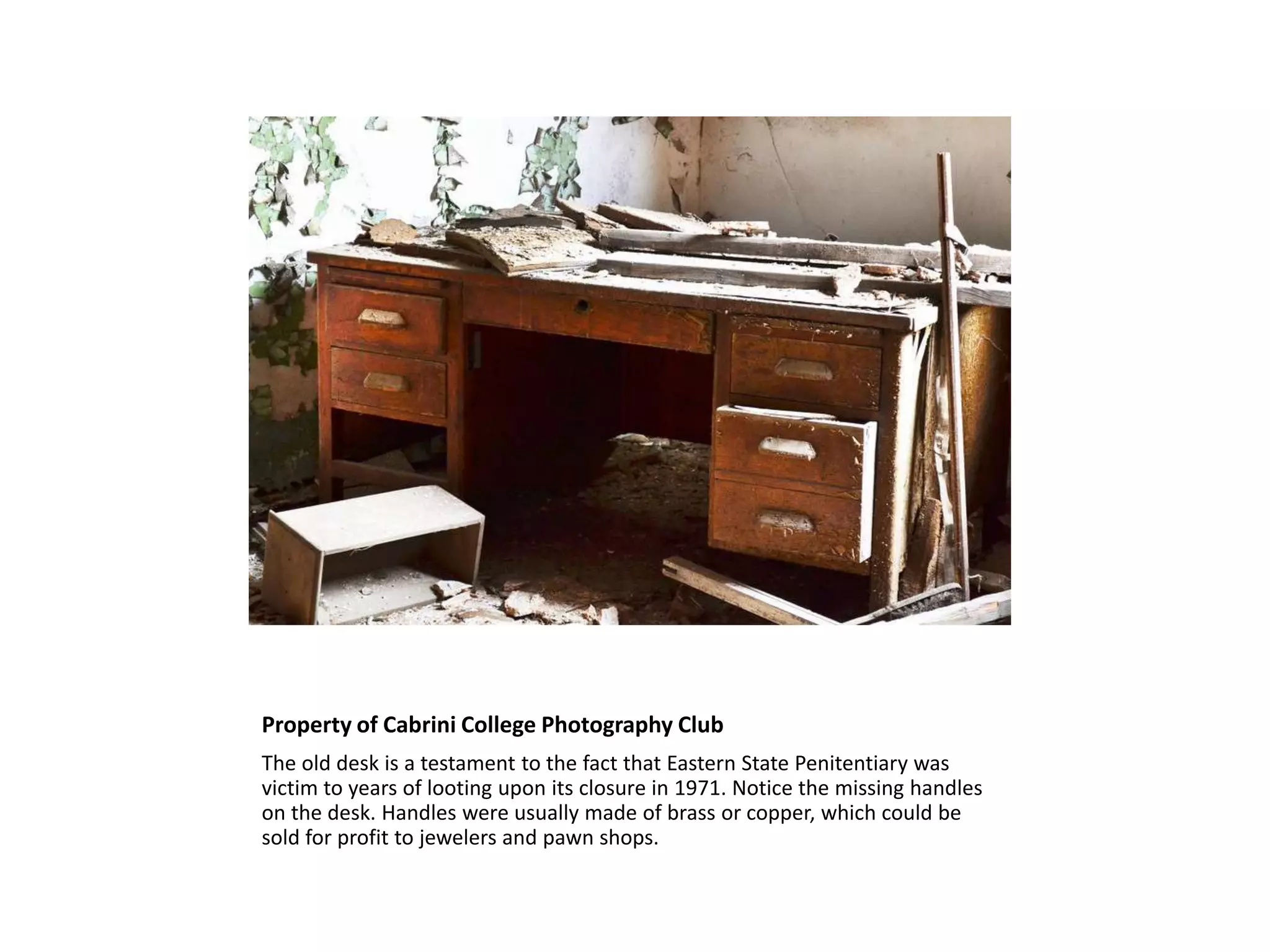
Eastern State Penitentiary isn't just a building. It is a massive, crumbling, radial-design stone beast that sits right in the middle of Philadelphia. For nearly thirty years, it hosted Terror Behind the Walls, a massive Halloween event that basically defined the modern haunted attraction industry. Then, it just stopped.
People were shocked.
If you've ever stood inside those cell blocks in the dead of night, you know the vibe is heavy. It’s not just the peeling paint or the rusted iron. It’s the history. Eastern State opened in 1829 with a radical, somewhat terrifying idea: total isolation. They thought silence would lead to penitence. Instead, it mostly led to mental breakdowns. By the time the haunt took over in the 1990s, the "terror" was already baked into the walls.
What Terror Behind the Walls Really Was
Most haunted houses are built in warehouses or empty cornfields. This was different. You were walking through actual history. The event used the prison's actual architecture—staggering 30-foot ceilings and narrow, dark corridors—to mess with your head. It wasn't just about jump scares. It was about the atmosphere.
The scale was nuts.
At its peak, the production employed over 200 performers. They had makeup artists who worked on Hollywood films. They had custom-designed animatronics. But the real draw was the "Opt-In" experience. You’d get a glowing red necklace if you wanted the actors to touch you, grab you, or pull you into hidden passageways. It was intense. Some would say it was too much. Honestly, for many haunt enthusiasts, it was the gold standard.
The Shift from Spooky to Sustainable
In 2020, everything changed. The world stopped because of the pandemic, obviously. But for Eastern State Penitentiary, it was a moment of reckoning. The site is a National Historic Landmark. It’s a non-profit. The board started looking at the "Terror Behind the Walls" brand and realized it might be a problem.
Why?
Because the prison’s day mission had shifted. During the day, the museum focuses on mass incarceration, social justice, and the reality of the American legal system. Then, at night, they were charging $50 for people to scream at "scary prisoners." The optics started to feel... off.
They realized that turning a place of genuine human suffering into a funhouse was becoming harder to justify. You've got tourists learning about the tragic life of "Slick Willie" Sutton or Al Capone's stay in a luxury cell at 2:00 PM, and then at 8:00 PM, you've got zombies in jumpsuits jumping out of those same cells. It was a weird double life.
The Rebrand: Halloween Nights
They didn't just kill the event. They evolved it. Terror Behind the Walls was officially retired and replaced by "Halloween Nights."
It was a huge risk.
The new format is more like a festival. Instead of one long, linear path where you’re forced to walk through every scare zone, it’s now an open-world experience. You can go to a beer garden. You can watch a dance performance. You can still go into "scare zones," but they are smaller and more themed. There’s a heavy emphasis on art and light shows now.
Some die-hard fans hated it. They missed the raw, aggressive energy of the old haunt. But the numbers tell a different story. By diversifying the experience, Eastern State managed to attract a wider crowd—people who want the "spooky vibe" without necessarily wanting to be chased by a chainsaw-wielding maniac for an hour.
The Real History You Can't Script
Despite the theatricality of the haunt, the real "terror" happened in the 19th century. Eastern State was the world’s first true "penitentiary." Before this, jails were just holding pens where everyone was tossed in together.
The "Pennsylvania System" forced inmates to stay in their cells 23 hours a day. When they left, they wore hoods over their heads so they couldn't see other inmates. They weren't allowed to talk. Ever.
The physical toll was documented by none other than Charles Dickens. He visited in 1842. He was horrified. He wrote that the "slow and daily tampering with the mysteries of the brain" was immeasurably worse than any physical torture. He saw men who had been broken by the silence. That’s the real ghost in the room.
When you walk through the ruins today, you see the remnants of that experiment. The skylights in the cells were called the "Eye of God." They were designed to make prisoners feel like they were always being watched by a higher power. It's creepy. You don't need a guy in a rubber mask to feel that.
Why the Haunt Industry is Changing
The death of the classic Terror Behind the Walls model reflects a bigger trend in the US. Haunts are moving away from the "asylum" and "prison" tropes.
There's a growing awareness that mental health and incarceration aren't great themes for lighthearted entertainment. Places like Pennhurst Asylum in Pennsylvania have faced similar criticism. They still operate, but the conversation is shifting.
Creators are getting more creative. Instead of relying on tropes that might be seen as punching down, they are leaning into cosmic horror, folklore, and immersive theater. It’s a smarter way to scare people.
Survival Tips for Visiting Eastern State Today
If you're heading to Philly to see the ruins or attend the new Halloween Nights, you need to go in with a plan. It's a massive site.
- Wear sturdy shoes. Seriously. The floors are uneven, and the stone is cold. Your fancy boots will get ruined.
- Do the audio tour first. Narrated by Steve Buscemi, it’s one of the best museum tours in the country. It gives you the context you need before the sun goes down.
- Check the weather. The prison is largely unheated and exposed to the elements. If it’s 40 degrees outside, it’s 35 degrees inside those stone walls.
- Look for the hidden bars. During the Halloween event, there are speakeasies tucked away in the back of the cell blocks. They are the best places to soak in the atmosphere without the crowds.
The Legacy of the Walls
So, is the "terror" gone?
Not really. It’s just different.
Eastern State Penitentiary remains one of the most haunted-looking places on Earth. Whether you believe in ghosts or just believe in the power of heavy history, the building stays with you. It’s a monument to an idea that failed, preserved in a state of "stabilized ruin."
The transition from a pure "scream park" to a hybrid historical-festive event was probably the only way to save the site. The revenue from the Halloween season pays for the preservation of the building for the rest of the year. Without the scares, the walls would likely have crumbled into a pile of rubble decades ago. It’s a weird irony: the ghosts of the past are literally keeping the roof over the building’s head.
If you want the best experience, go late in the season. The crowds thin out, the air gets that sharp autumn bite, and the shadows in Cell Block 12 seem just a little bit longer. You don't need the actors to tell you it's time to be afraid. The building does that all on its own.
How to Explore the History Yourself
If you’re interested in the darker side of American history or the evolution of the haunt industry, your next move is to look beyond the jump scares.
Start by visiting the official Eastern State Penitentiary website to book a "Twilight Tour." These are held in the evening but focus on history rather than theatrics. It’s the best way to see the radial architecture without the fog machines. If you’re a fan of haunt design, look up the work of Leonard Pickel or the early crews who built the original sets for Eastern State; their techniques are still the blueprint for the entire industry. Finally, read the "American Notes" by Charles Dickens—specifically the chapter on Philadelphia—to understand why the world was so fascinated and horrified by this "terror" long before it became a tourist attraction.
The walls are still talking. You just have to be quiet enough to hear them.