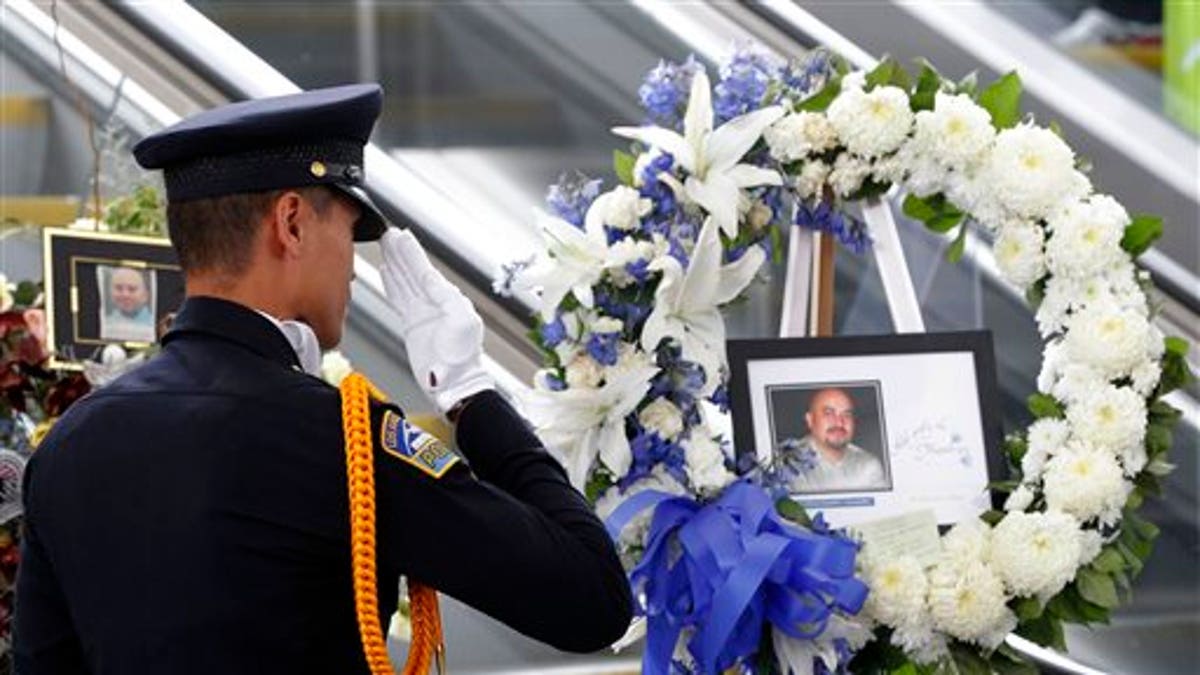
It was a normal Friday morning. November 1, 2013. If you’ve ever been to Los Angeles International Airport, you know the drill: the chaotic loop, the smell of jet fuel, and the endless shuffle of people trying to make their connections at Terminal 3. But at 9:20 a.m., that routine shattered. A lone gunman walked into the terminal, pulled a semi-automatic rifle from a bag, and changed the face of American aviation security forever.
When people talk about a shooting at LAX airport, this is the event that usually comes to mind. It wasn't just a random act of violence; it was a targeted strike against the very people meant to keep us safe. Gerardo Hernandez, a 39-year-old Transportation Security Administration (TSA) officer, became the first TSA employee killed in the line of duty since the agency’s inception after 9/11.
People were terrified. They were diving behind suitcases. Some literally ran out onto the tarmac, dodging planes. It’s the kind of chaos you can’t really prepare for, even with all the drills in the world.
The Timeline of the 2013 LAX Attack
The shooter, Paul Anthony Ciancia, didn't just wander in. He had a specific grievance against the federal government. He entered Terminal 3, pulled out a Smith & Wesson M&P15, and began firing. He moved past the document checking station and headed toward the screening area.
Hernandez was the first hit.
The shooter actually went up an escalator, realized Hernandez was still moving, and went back down to fire again. It was brutal. Honestly, the details from the subsequent investigation are chilling because they show a level of intent that goes beyond a simple "spontaneous" outburst. Two other TSA officers and a civilian were wounded before airport police finally took the shooter down near a Burger King.
The whole thing lasted less than ten minutes. But the airport stayed paralyzed for much longer.
Think about the logistical nightmare of shutting down one of the world's busiest hubs. Flights were diverted to Ontario, Long Beach, and Vegas. Thousands of bags were just... left there. Passengers were stranded on planes for hours because there was no "clear" gate to pull into. It was a mess.
Why Communication Failed That Day
You’d think an airport like LAX would have a foolproof communication system, right? Wrong.
One of the biggest takeaways from the after-action reports—specifically the one commissioned by Los Angeles World Airports (LAWA)—was that the emergency alerts were a disaster. Some staff didn’t get the "active shooter" page for several minutes. The "Red Phone" system, which is supposed to link various agencies instantly, didn't work as advertised.
- Panic reigned because people didn't know where to go.
- The PA system was barely audible in certain zones.
- Officers from different agencies (LAPD vs. Airport Police) had trouble talking on the same radio frequencies.
It's kinda wild when you realize that in 2013, we were still struggling with basic "interoperability." That's the fancy word the government uses when radios don't talk to each other. Basically, the guys in the blue uniforms couldn't hear the guys in the black uniforms, and everyone was left guessing.
The 2016 Panic: A "Shooting" That Wasn't
Fast forward to August 2016. The ghost of the shooting at LAX airport returned, but this time, there was no gun.
Loud noises—likely just people clapping or banging on plastic barriers—were mistaken for gunfire in Terminal 8. Within seconds, the "active shooter" rumors hit Twitter. It was a "cascading" panic. People saw other people running, so they ran too. It’s a psychological phenomenon called social proof. If everyone is sprinting for their lives, you don't stop to ask for a source. You run.
This 2016 scare was actually more revealing than the 2013 event in some ways. It showed that the trauma of the previous shooting had left a permanent mark on the airport's psyche. It also highlighted that even without a bullet being fired, an airport can be brought to its knees by fear. We saw people jumping over security fences again. The "evacuation" was completely unmanaged.
Lessons Learned and Security Overhauls
So, what actually changed? Did we just get more "TSA PreCheck" lines? Not exactly.
After the 2013 tragedy, the TSA significantly increased the presence of armed officers at checkpoints. Before this, many TSA officers felt like sitting ducks. They have no weapons; they carry hand sanitizer and blue gloves. Now, you’ll notice more LAPD or Airport Police officers standing within "line of sight" of the document checkers.
They also revamped the panic button system. In 2013, the officer at the podium didn't have a quick way to alert the central command without reaching for a phone that was out of reach. Today, those systems are much more integrated.
The Shift in "Soft Target" Strategy
Security experts like Jeff Price, who literally wrote the book on airport security (Aviation Security Management), have pointed out that we shifted our focus. We spent a decade worrying about the "sterile" side of the airport—the gates and the planes. The 2013 shooting at LAX airport reminded us that the "landside" (the lobby, the check-in counters, the sidewalk) is just as vulnerable.
It's a "soft target." There’s no metal detector to get into the lobby. You just walk in.
Because of this, you’ve probably noticed more K-9 units sniffing bags near the entrance. These aren't just drug dogs; they are vapor-wake dogs trained to detect explosives or gunpowder on a moving person. It’s a subtle layer of security that most people ignore while they’re looking for the shortest line to drop their bags.
The Human Toll Nobody Mentions
We talk about "policy" and "security layers," but we rarely talk about the survivors. The TSA officers who were there in 2013 faced massive PTSD. Many didn't come back to work. The agency had to provide extensive counseling, but for a long time, the morale at LAX was at an all-time low.
Imagine going to a job where your primary task is to find a bottle of water in a carry-on, but in the back of your mind, you’re constantly scanning for a rifle. That changes a person. It changes the way they interact with travelers. When you see a TSA agent who looks particularly grumpy, honestly, give them a break. Their job description changed significantly on that November morning.
What to Do if You're Caught in an Airport Incident
Look, nobody wants to think about this while they're headed to Maui. But the reality is that airports remain high-profile targets. The "Run, Hide, Fight" mantra is the gold standard for a reason.
- Don't look for your bags. This is the biggest mistake people make. They want their laptop or their carry-on. Leave it. Your life is worth more than a MacBook.
- Know the exits that aren't the front door. Look for the "Authorized Personnel Only" doors. In an emergency, those rules go out the window. If a door leads to the tarmac and away from the threat, take it.
- Find "Hard Cover." A suitcase is not cover; it’s concealment. A concrete pillar or a thick metal counter is cover.
- Silence your phone. If you're hiding, the last thing you want is a "Breaking News" alert or a call from your mom giving away your position.
The 2013 shooting at LAX airport taught us that the first few minutes are entirely up to you. The police are fast, but they aren't "instant." You have to be your own first responder for those first sixty seconds.
Final Perspective on Airport Safety
Is LAX safe today? Generally, yes. It's probably one of the most heavily policed spots in the country. But no system is perfect. Security is always a game of cat and mouse. When we harden the cockpit doors, they attack the cabin. When we harden the cabin, they attack the checkpoint. When we harden the checkpoint, they attack the lobby.
The goal isn't just to have more guards; it's to have better intelligence and faster response times. Since the 2013 incident, LAX has invested millions in its "Incident Management Center," which centralizes video feeds and communications. They’re much better at "seeing" the whole airport at once now.
Actionable Steps for Travelers
- Download the airport's official app. They often push emergency notifications faster than the news.
- Sign up for Wireless Emergency Alerts (WEA). Make sure they aren't disabled on your phone.
- Trust your gut. If someone leaves a bag or is acting strangely in the "soft" areas of the terminal, tell someone. The "See Something, Say Something" campaign is cliché, but it actually works when people take it seriously.
- Keep your shoes on. If you have TSA PreCheck, keep your shoes on. If you don't, and you're at the bins when something happens, don't stop to put your shoes back on. Run in your socks.
The 2013 shooting at LAX airport remains a somber chapter in the history of Los Angeles. It serves as a constant reminder that the infrastructure of our daily lives—the places we go to start our vacations or head home for the holidays—requires constant vigilance and a willingness to adapt when things go wrong.
Next Steps for Your Safety
Review your own emergency preparedness by familiarizing yourself with the "Run, Hide, Fight" protocol provided by the FBI. On your next trip through any major terminal, make it a habit to identify at least two exit points that aren't the main entrance as soon as you clear security. Staying aware of your surroundings is the single most effective tool you have for personal safety in high-traffic public spaces.