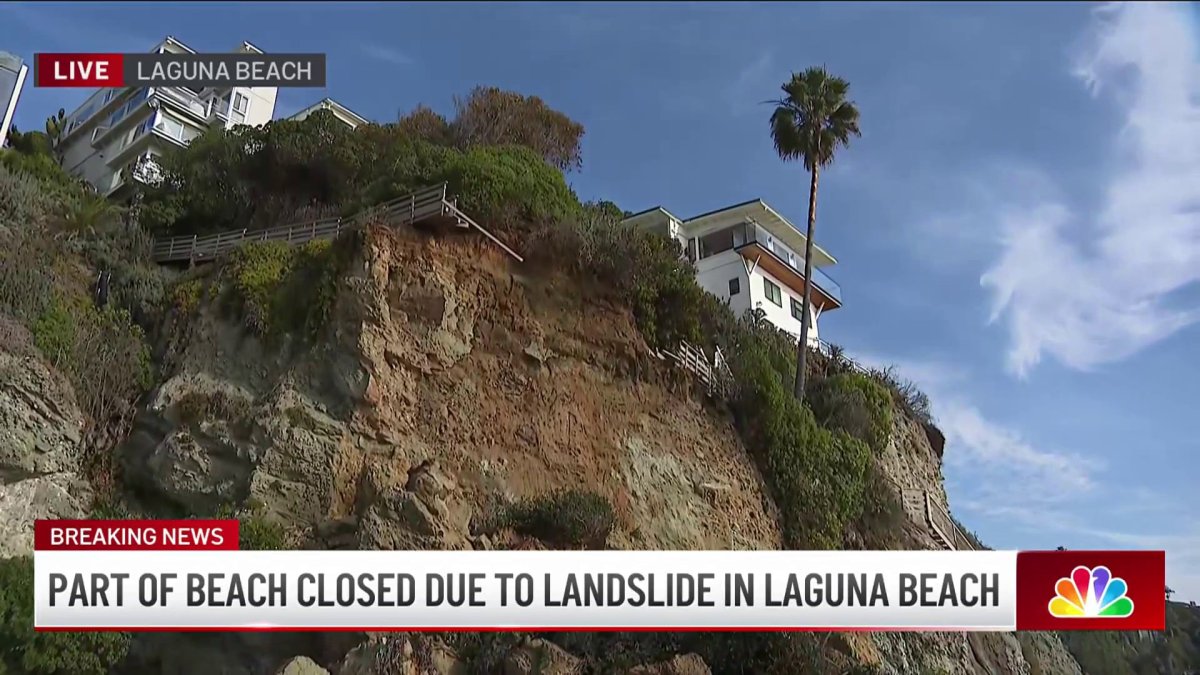
Laguna Beach is beautiful. It's also moving. If you’ve ever walked along the bluffs at Heisler Park or driven down PCH during a heavy rain, you've probably felt that slight sense of unease. It’s not just your imagination. The reality of a landslide in Laguna Beach is a constant, lingering factor for anyone living on these iconic hillsides. It isn’t just about the rain. It’s the geology.
The dirt here is tricky.
Basically, much of the city sits on what geologists call "ancient landslide deposits." This means the ground has already failed once, thousands of years ago. It’s sitting in a delicate state of equilibrium. When we add houses, swimming pools, and intense atmospheric rivers into the mix, that balance gets thrown off. Fast. We saw this in 1978. We saw it in 2005. And honestly, with the way weather patterns are shifting, we’re seeing the "unprecedented" become kind of a regular occurrence.
Why Laguna Beach Landslides Are Different
Most people think a landslide is just mud sliding down a hill after a storm. That’s a debris flow. Laguna deals with those, sure, but the bigger threat is the deep-seated bedrock failure.
In 2005, the Bluebird Canyon landslide didn't just happen because it rained that morning. It was the cumulative effect of a record-breaking wet season. The water seeps deep—way down into the Monterey Formation. This is a layers-of-cake geological structure made of siltstone and shale. When those layers get saturated, they turn into a lubricant. The whole mountain basically decides to go for a ride.
Nineteen homes were destroyed in that Bluebird Canyon event. It wasn’t a wall of mud; it was the earth itself shifting and buckling. People woke up to their floors tilting. It's a slow-motion disaster that feels incredibly personal because it literally takes your foundation.
The Role of the Monterey Formation
Geologists like Dr. J. David Rogers have spent years pointing out that Southern California's coastal canyons are essentially a giant jigsaw puzzle of old slide blocks. The Monterey Formation contains bentonite clay. If you haven't heard of it, just know it’s incredibly thirsty. It expands when wet and loses almost all its strength.
Imagine trying to build a house on a stack of wet playing cards tilted at a thirty-degree angle. That’s the structural reality for many neighborhoods.
The 1978 Bluebird Canyon Memory
We have to talk about 1978 because it changed how the city views development. October 2. A massive chunk of the hillside gave way, destroying over 20 homes. No one died, which is a miracle, but the financial devastation was total.
The city eventually rebuilt, but the cost was astronomical. They had to install massive "canyon stabilizers" and drainage systems that most residents don't even know are there. If you’re walking around that area today, you’re walking on top of millions of dollars of engineering designed to keep the mountain in place.
But engineering has limits.
Nature doesn't care about your retaining wall if the failure is 50 feet below the wall's foundation. This is why the city has such a rigorous "Hillside Development" permit process. It's not just red tape. It's survival.
Looking at the 2023 and 2024 Close Calls
Recently, we’ve had some scary moments. The winter of 2023 brought insane amounts of water. In March of that year, a landslide hit behind a building on PCH near Bluebird Canyon Drive. It forced evacuations. It closed businesses.
Then you have the coastal bluff erosion.
Places like Victoria Beach and the areas around the Montage are seeing the ocean eat away at the "toe" of the slope. When the ocean removes the bottom of the hill, the top has nowhere to go but down. It’s a two-front war: water from the sky and waves from the sea.
Honestly, the risk isn't just to the multi-million dollar mansions. It's the infrastructure. When a landslide in Laguna Beach takes out a section of PCH, the whole county feels it. There are only a few ways in and out of this town. If the canyon roads (133) or PCH are blocked, the city becomes an island.
Common Misconceptions About Property Safety
A lot of buyers come in from out of state and see a beautiful view. They see a sturdy-looking house. They don't check the landslide hazard maps.
- "My house is on a flat lot, I'm safe." Not necessarily. If you are at the bottom of a steep slope, you are in the "runout zone." If the hill behind you fails, it ends up in your living room.
- "The vegetation will hold the soil." This is a half-truth. Shallow roots help with surface erosion, but they do nothing for deep-seated landslides. In fact, heavy trees can sometimes add "driving weight" to a slope, making a slide more likely if the soil is saturated.
- "Insurance covers this." This is the biggest one. Standard homeowners insurance almost never covers earth movement. You need a separate, often expensive, DIC (Difference in Conditions) policy.
The Warning Signs You Need to Watch For
If you live in the hills, you have to be a bit of a detective. You’ve got to look for the "tell-tale" signs that the ground is stressed.
- Doors and windows sticking. This isn't just "old house charm." If a door that used to swing freely suddenly binds, the frame might be tilting.
- Cracks in the soil. If you see a fissure opening up in your yard, especially one that follows the contour of the hill, that's a "scarp." It’s the start of a slide.
- Leaning trees or utility poles. Geologists call these "pistol-butt" trees when the trunk curves to try and stay vertical while the ground moves.
- New springs. If water starts bubbling up in your yard where it’s never been wet before, the internal drainage of the hill has shifted.
What the City is Doing Now
Laguna Beach has some of the most sophisticated monitoring in the state. They use GPS sensors embedded in the hills to track movement in millimeters.
They also focus heavily on drainage. Water is the enemy. By keeping water off the slopes and into lined pipes, they reduce the "pore pressure" that triggers slides. But the city can only do so much on public land. Private property owners have a huge responsibility to maintain their own drains and avoid over-watering.
Don't over-water your succulents on a cliff. Just don't.
Actionable Steps for Residents and Buyers
If you’re living in or looking at Laguna Beach, you need to be proactive. Waiting for the city to tell you there's a problem is usually too late.
Check the Fault and Hazard Maps
The California Geological Survey (CGS) has interactive maps. Look up your specific address. See if you are in a "Liquefaction Zone" or a "Landslide Regulatory Zone." These aren't just suggestions; they are based on historical data.
Audit Your Drainage
Every year before the rains hit in November, check your drains. Clean out the leaves. Make sure your downspouts aren't dumping water right at the base of your foundation. You want that water as far away from the slope as possible.
Hire a Geotechnical Engineer
If you see a crack in your pool or a gap in your retaining wall, don't call a handyman. Call a Geotechnical Engineer. They are the only ones qualified to tell you if your hill is moving. It costs a few thousand dollars for an inspection, but it can save you millions.
Monitor Local Weather Reports Closely
In Laguna, we watch "thresholds." If we get more than 2-3 inches of rain in a 24-hour period after the ground is already soaked from previous storms, the risk of a landslide in Laguna Beach skyrockets. That's when you should have your "go-bag" ready.
The geography of Laguna Beach is what makes it spectacular, but that beauty comes with a literal price of instability. Staying informed and respecting the power of the local geology is the only way to live safely on these cliffs. Pay attention to the ground beneath your feet; it’s more active than you think.