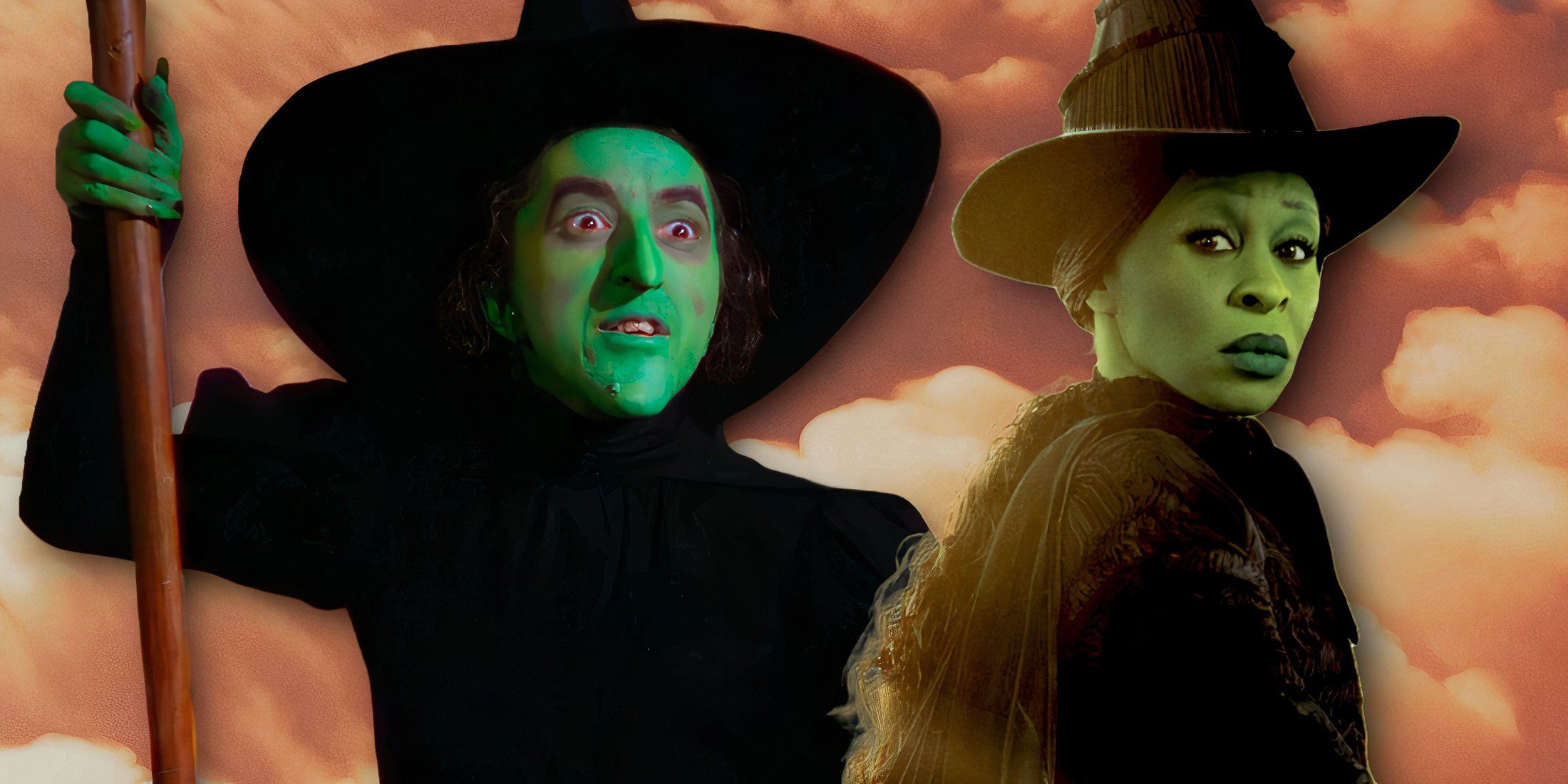
She’s the reason you were afraid of the dark. Honestly, if you grew up watching The Wizard of Oz, that cackle is probably hard-wired into your nervous system. The Wicked Witch of the West isn't just a character; she is the blueprint for every cinematic antagonist that followed. But here’s the thing—most people forget she’s only on screen for about twelve minutes.
Twelve minutes. That's it.
Margaret Hamilton, the actress who brought the green-skinned menace to life in 1939, managed to create an icon in less time than it takes to cook pasta. It’s wild when you think about it. We’re talking about a performance so potent it overshadowed the lead protagonist for generations of fans. People don't just remember the ruby slippers; they remember the smoke, the broomstick, and that terrifyingly sharp nose.
Where the Wicked Witch of the West Actually Came From
L. Frank Baum wrote the original book, The Wonderful Wizard of Oz, back in 1900. If you’ve only seen the movie, the book version of the character might feel a bit... weird. In the novel, she only has one eye. And it works like a telescope. She doesn't have green skin in the book either; that was a creative choice made by MGM technicians because they wanted to show off their fancy new Technicolor process. Green popped. It looked alien. It looked "wicked."
She wasn't even the main focus of the book's narrative for very long. Dorothy and the gang meet her, she enslaves them for a bit, and then she’s melted. Simple. But the 1939 film changed the stakes. By making her the sister of the Wicked Witch of the East (the one Dorothy accidentally crushed with a house), the screenwriters gave her a motive. Suddenly, it wasn't just about a magic belt or shoes. It was about revenge. It was personal.
The Physical Toll of Being Wicked
Playing the Wicked Witch of the West was actually dangerous. This isn't some "cursed set" Hollywood myth; it’s documented history. Margaret Hamilton suffered second and third-degree burns during the scene where she disappears in a cloud of fire and smoke in Munchkinland. The trap door failed, and the phosphorus-based makeup ignited. She was out for six weeks.
When she came back? She refused to work with anything involving fire. Can you blame her?
The makeup itself was a nightmare. It was copper-based and toxic. Hamilton couldn't eat during filming because of the risk of ingesting the green paint, so she lived on a liquid diet through a straw. It took forever to scrub off at the end of the day. Her skin stayed green for weeks after filming wrapped. It’s the kind of dedication you just don't see as often in the era of CGI and digital overlays. She earned that iconic status through literal blood, sweat, and copper paint.
A Villain with Actual Layers
While the 1939 film paints her as pure evil, modern interpretations like Gregory Maguire’s Wicked (and the subsequent Broadway smash and film) flipped the script. They gave her a name: Elphaba.
This shifted the narrative from a black-and-white morality tale to a messy, political tragedy. Suddenly, the Wicked Witch of the West wasn't just "bad." She was a revolutionary. She was an outcast. She was a woman who saw the corruption of the Wizard and decided to fight back, even if it meant being labeled a villain by the state. It’s a fascinating look at how we perceive "evil" versus "rebellion."
But let’s be real. Even with the sympathetic backstory of the musical, the 1939 version remains the definitive image. Why? Because she’s scary. She doesn't need a tragic childhood to justify her actions in that movie. She wants those shoes. She wants power. There is something refreshing about a villain who is just unapologetically good at being bad.
The Psychological Impact of the Cackle
Let’s talk about the voice. That high-pitched, rasping laugh.
Margaret Hamilton was actually a former kindergarten teacher. Yeah, seriously. She loved children. After the movie came out, she was reportedly devastated that she scared kids so much. She even went on Mr. Rogers' Neighborhood in 1975 to explain to children that the witch was just a character and that she was a kind person in real life. She put on the costume (well, a simplified version) to show them it was all just "make-believe."
Psychologically, the Wicked Witch of the West represents the "shadow" in Jungian terms. She is everything Dorothy isn't. Dorothy is home, hearth, and innocence. The Witch is independence, power, and malice. She is the obstacle that forces the hero to grow up. Without the threat of the melting bucket, Dorothy never finds her inner strength.
Why the Green Skin Still Matters in Pop Culture
The visual shorthand of the green-skinned witch is everywhere. You see it every Halloween. You see it in The Simpsons, in Once Upon a Time, and even in the Disney villains. That specific shade of "mean green" started with a makeup artist named Jack Dawn in 1939.
It’s interesting to note that the film’s producers almost went a different way. They originally wanted the witch to be beautiful and "glamorous," similar to the Evil Queen in Snow White. They even did screen tests with actress Gale Sondergaard. But they eventually realized that a "hag" archetype was much more visceral and terrifying for the audience they were targeting.
- The Flying Monkeys: These weren't just costumes; they were mechanical marvels for the time.
- The Broomstick: Specifically designed to look jagged and "unrefined."
- The Crystal Ball: A classic trope of divination that the movie solidified for the Western "witch" aesthetic.
Identifying the Real Power of the Character
If you look at the screenplay, the Witch is incredibly proactive. She’s the one moving the plot. The Wizard is a fraud hiding behind a curtain. Glinda is a bit manipulative (she knew about the shoes the whole time, right?). But the Wicked Witch of the West? She’s honest about what she wants.
She uses her resources. She has an army of Winkie Guards. She has an aerial surveillance team of primates. She has atmospheric control (that poppy field wasn't just a coincidence). In terms of "Business Management for Villains," she’s actually quite efficient. Her only real downfall was a lack of workplace safety regarding open water containers near her person.
Honestly, the "melting" scene is one of the most famous deaths in cinema history. "I'm melting! Melting! Oh, what a world!" It wasn't just a death; it was a tantrum. It was the total dissolution of an ego.
Actionable Insights for Fans and Creators
If you are a writer or a creator looking to build a compelling antagonist, look at Hamilton’s performance. She didn't have much screen time, so she made every second count with sharp physical movements and a voice that cut through the orchestral score.
For the fans, the next time you watch the film, pay attention to the shadows. The way the director, Victor Fleming, uses lighting to elongate her silhouette makes her feel ten feet tall.
To truly understand the legacy of the Wicked Witch of the West, do these three things:
- Watch the 1975 Mr. Rogers segment. It’s on YouTube. It completely changes how you view Margaret Hamilton’s craft and her humanity.
- Read the original 1900 book. Compare the "One-Eyed Witch" to the Technicolor version. It’s a lesson in how adaptation can sometimes surpass the source material in the public consciousness.
- Analyze the "Surrender Dorothy" skywriting. It’s one of the first instances of "viral marketing" within a fictional world. She used the sky itself as a billboard for terror.
The Wicked Witch of the West remains the gold standard because she is a pure distillation of our fears. She is the authority figure gone wrong, the vengeful force that can't be reasoned with. And yet, we can't look away. Whether she’s Elphaba or just the unnamed crone from the West, she is the engine that makes the Land of Oz work. Without her, it’s just a colorful dream. With her, it’s a legend.