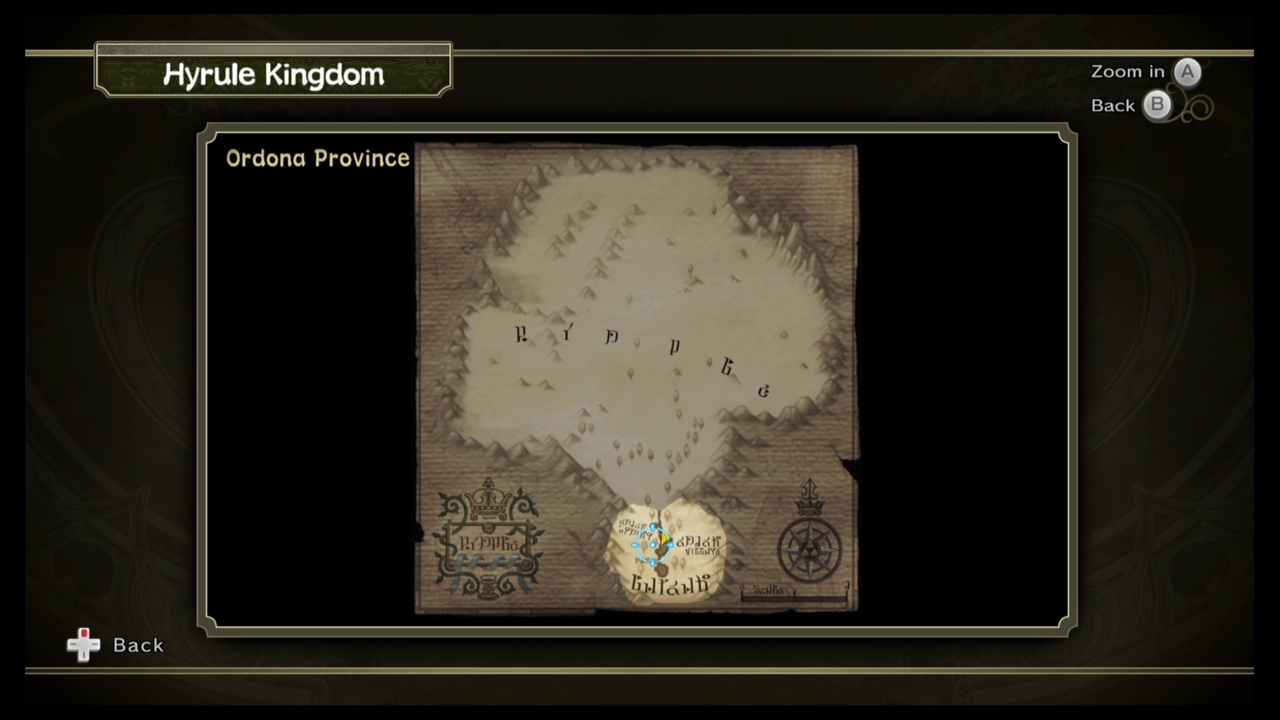
You remember that feeling. You’re standing on the Bridge of Eldin, looking out over a massive, hazy gorge, and for the first time in a Zelda game, the world actually feels big. Not just "video game big," but genuinely daunting. The Zelda Twilight Princess map was a turning point for Nintendo. It was their attempt to prove that Hyrule could be dark, gritty, and expansive enough to compete with the rising tide of Western RPGs. But if you look at it closely today, it's actually one of the strangest, most fragmented pieces of geography in the entire franchise. It’s a masterpiece of atmosphere, but a total nightmare for anyone trying to make sense of Hyrule’s actual history.
Honestly, the map is a bit of a lie. It’s huge, yeah, but it’s designed like a hub-and-spoke wheel. You’ve got the sprawling Hyrule Field in the middle, but it’s sliced into these distinct provinces—Ordona, Faron, Eldin, Lanayru, and the Peak Province. Back in 2006, this felt revolutionary. Today? It’s a fascinating look at how developers used "bottleneck" level design to hide the fact that the GameCube was screaming for mercy trying to render it all.
The Great Mirror Flip Scandal
We have to talk about the elephant in the room. Or rather, the map in the mirror. Depending on whether you played the original GameCube version or the Wii port, your Zelda Twilight Princess map is literally backwards.
Because most people are right-handed, Nintendo decided late in development that Wii players should swing the remote with their right hand to make Link attack. But Link is traditionally left-handed. Instead of re-animating every single interaction in the game, Nintendo took the easy way out: they mirrored the entire world. If you’re on the Wii, Kakariko Village is to the east. On the GameCube? It’s to the west. This created a decade of arguments in the Zelda fandom. If you’re trying to use a map to find a Heart Piece or a Poe Soul, you absolutely have to know which reality you’re living in. It’s not just the directions that changed; even the sun rises and sets on the "wrong" side of the world in the Wii version.
Later, when Twilight Princess HD hit the Wii U, they went back to the GameCube layout as the "canon" version, but kept the mirrored version for Hero Mode. It's confusing. It's weird. It's peak Nintendo.
Faron, Eldin, and the Illusion of Scale
The map is divided into these massive chunks, but they aren't created equal. Faron Woods is your classic "starter forest," but the way it connects to the rest of the world is via a narrow gorge. This is where the game’s scale starts to feel real. You aren't just walking into a new zone; you’re crossing a geographical threshold.
- Faron Woods: Dense, foggy, and surprisingly vertical. It houses the Forest Temple and the Sacred Grove.
- Eldin Province: This is where things get rugged. You have Kakariko Village tucked into the base of Death Mountain. The trail up the mountain is iconic, featuring those falling rocks that gave everyone anxiety back in the day.
- Lanayru Province: This is the heart of the map. It’s where you find Castle Town, Lake Hylia, and the Zora's Domain.
The Lanayru section is where the Zelda Twilight Princess map truly opens up. Seeing the Great Hylia Bridge for the first time—and then fighting King Bulblin on it—is a core memory for an entire generation of gamers. But notice how these areas are connected. They aren't seamlessly open like Breath of the Wild. They are connected by "loading corridors" disguised as canyons. It’s a brilliant trick. You feel like you’re traveling through a vast kingdom, but the game is actually just shuffling you between large, open rooms.
Why the City in the Sky Ruins the Geography
People love to talk about the lore of the Oocca, those weird bird-people with human faces. But from a map perspective, the City in the Sky is a massive outlier. You access it by getting shot out of a giant cannon from Lake Hylia.
Think about that for a second.
The Zelda Twilight Princess map doesn't just exist on a horizontal plane; it has these weird vertical appendages. You have the Twilight Realm, which is its own pocket dimension accessed through the Mirror of Twilight in the Gerudo Desert. You have the City in the Sky. You have the Palace of Twilight. These locations aren't "on" the map in a traditional sense, but they define the game's sense of place. The Gerudo Desert itself is actually isolated from the rest of the world. You can't just walk there. You have to be launched there by a cannon. It makes the desert feel like an island, totally disconnected from the politics of Hyrule Castle, which fits the story perfectly.
The Hidden Village and the Dead Ends
One of the coolest parts of the map is the Hidden Village. It’s tucked away behind a rock slide in the Eldin province. It’s basically a Wild West shootout set in a Zelda game. This is what makes the Zelda Twilight Princess map so special—it's full of these little sub-pockets that feel like they have their own history.
However, let’s be real: the map has some "empty" problems.
Hyrule Field is gorgeous, especially with that sweeping orchestral score playing while you gallop on Epona. But once you’ve cleared the game, you realize how much of that space is just... space. There are golden bugs to find and some hidden caves, sure. But compared to the dense, secret-packed map of A Link to the Past, Twilight Princess can feel a little hollow in the transition zones. It was a victim of its time—trying to be "epic" meant sacrificing density for distance.
Navigating the Map: The Wolf Link Advantage
Fast travel in this game is actually some of the best in the series. Midna’s ability to warp you via "Portals" created by defeating Shadow Beasts is a godsend. It turns the Zelda Twilight Princess map into a series of tactical jump points.
When you’re in Wolf Link form, the map changes. Your "Senses" allow you to see things that Link can't—spirits, digging spots, and the scent trails of key characters. This adds a second layer to the geography. You aren't just looking for paths; you’re looking for smells. Tracking the scent of Ilia through Hyrule Castle Town is a great example of how the map becomes a narrative tool rather than just a floor plan.
The Actionable Reality of Mapping Hyrule
If you’re heading back into the game or playing it for the first time, don't just rely on the in-game mini-map. It’s too zoomed in. To truly master the Zelda Twilight Princess map, you need to understand the topography.
Stop and look at the terrain. If you see a weirdly shaped rock formation in the distance, 90% of the time, there’s a Clawshot target or a chest there. The developers used the environment to lead your eyes. Also, keep track of the Owl Statues. They aren't just lore; they are vital for getting the Sky Book characters.
Master the "Great Bridge" shortcuts. There are several points where you can bypass the long, winding paths between provinces if you have the right items (like the Spinner or the Double Clawshots). The Spinner tracks on the walls of the Gerudo Desert and the Arbiter's Grounds are specifically designed to turn what looks like a wall into a highway.
Don't ignore the water. Lake Hylia is deep. Really deep. There are grottos at the bottom that most players miss because they don't want to deal with the Iron Boots. Use the map's Z-axis to your advantage.
The Zelda Twilight Princess map is a relic of a specific era of game design. It sits right between the "small but dense" worlds of the N64 and the "truly open" worlds of the Switch. It has flaws—the "corridor" connections, the empty patches of field—but it remains one of the most atmospheric versions of Hyrule ever built. It feels old. It feels tired. It feels like a kingdom that has seen too much war. And that is exactly what a map should do: tell a story without saying a word.