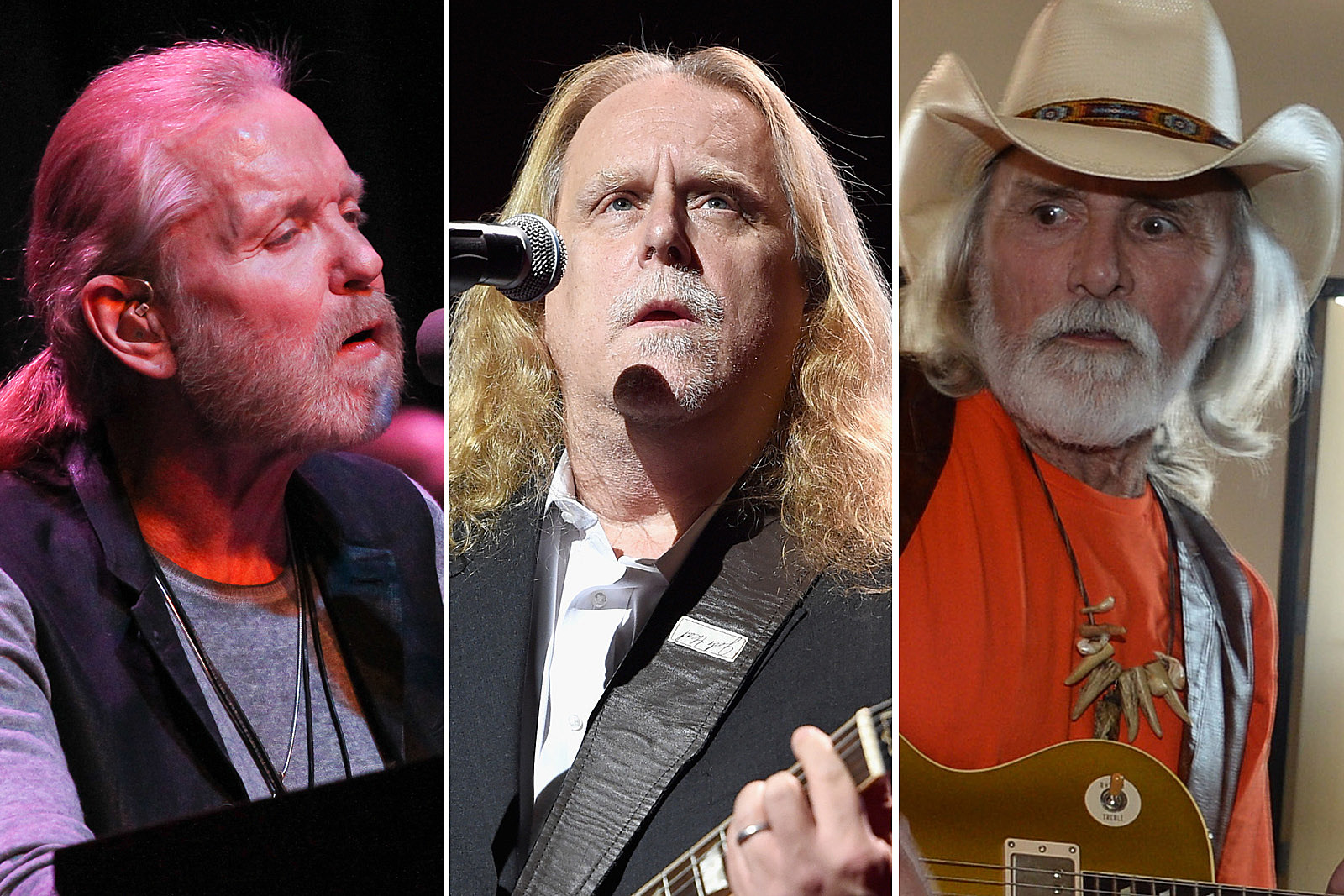
Most people think of southern rock and imagine a rebel flag and a simple three-chord boogie. They’re wrong. When you actually sit down and listen to the Allman Brothers Band guitarists, you isn't just hearing rock and roll; you're hearing a sophisticated, almost academic blend of Miles Davis-style jazz modalism and raw Mississippi Delta grit. It’s heavy. It’s complicated.
Duane Allman didn't just play the guitar. He attacked it. But he did so with the precision of a surgeon. When he and Dickey Betts first started locking heads in Jacksonville, they weren't trying to out-shred each other. They were trying to create a "third" guitar sound. That’s the secret. You’ve got two guys playing harmony lines that sound like a horn section from an old Stax record.
It changed everything.
The Duane Allman and Dickey Betts Architecture
In the beginning, it was all about the chemistry between Duane "Skydog" Allman and Forrest Richard "Dickey" Betts. Duane was the slide master. He used a glass Coricidin cold medicine bottle on his ring finger, a detail every blues-rock nerd knows by heart, but it’s the intonation that matters. Most slide players sound like a dying bird. Duane sounded like a gospel singer.
Dickey Betts brought the melody. If Duane was the fire, Dickey was the wind. Betts had this unique way of playing "sweet" pentatonic scales that felt like country music but bit like rock. Think about "In Memory of Elizabeth Reed." That’s Dickey. He wrote it. It’s got that bossa nova groove, and the guitar lines aren't blues licks—they’re jazz phrases.
They pioneered the "harmonized lead." Before them, if a band had two guitarists, one played rhythm and one played lead. Boring. The Allmans decided both would play lead at the same time, often in perfect thirds or fifths. It gave the band a massive, orchestral footprint. When Duane died in that tragic motorcycle accident in 1971, the world thought the band was dead too. Honestly, most bands would have been. But the Allman Brothers Band guitarists lineage was just getting started, even if the heart of the group was breaking.
The lone wolf era of Dickey Betts
For a while, Dickey had to carry the whole load. On the Brothers and Sisters album, you hear a shift. Since Duane was gone, Dickey leaned harder into his country roots. "Ramblin' Man" is the big hit, obviously. It’s catchy. But look at the guitar work on "Jessica." It’s a masterclass in composition. Dickey played all the guitar parts on that record himself, overdubbing the harmonies to maintain that signature sound.
He eventually brought in Les Dudek to help out in the studio, and Dan Toler joined later during the Enlightened Rogues period. Toler was a beast—a jazzier, more fluid player who kept the band from becoming a parody of itself during the late 70s. But things got messy. Drugs, egos, and the general burnout of the road took a toll. The band broke up. They got back together. They broke up again. It was a circus.
The 1989 Renaissance and Warren Haynes
When the band reformed for their 20th anniversary, they found a guy from North Carolina named Warren Haynes. He was playing in Dickey’s solo band at the time. Warren was the "missing link." He had the slide chops that reminded people of Duane, but he had a soulful, gritty voice and a songwriting sensibility that pushed the band forward.
The dynamic changed again. Now it was Dickey and Warren. This era was arguably the most technically proficient the band had ever been. They were tighter. They were sober (mostly). If you listen to Seven Turns or Where It All Begins, you can hear the Allman Brothers Band guitarists rediscovering the joy of the jam. Warren brought a "jam band" energy that helped the Allmans transition into a new decade where they became the godfathers of the whole scene—mentoring bands like Phish and Widespread Panic.
Then came the drama. There’s always drama. In 2000, the band famously sent Dickey Betts a fax telling him he was out. It was cold. It was controversial. Fans are still divided on it today. You can't really have the Allman Brothers without Dickey, right? Well, they tried.
Derek Trucks and the final gold standard
Enter the nephew. Derek Trucks had been a prodigy since he was nine years old. By the time he officially joined the band in 1999, he was already one of the best slide players on the planet. Pairing him with Warren Haynes was a stroke of genius.
This was the final, definitive lineup of Allman Brothers Band guitarists.
Derek doesn't use a pick. He plays with his fingers, which gives his tone a vocal, fleshy quality. He also tunes to Open E, just like Duane did, but his influences go way beyond the blues. He listens to Qawwali music, Indian classical stuff, and John Coltrane. When Derek and Warren traded solos at the Beacon Theatre during their annual residencies, it was spiritual.
Warren was the anchor. Derek was the explorer.
Why the "Layla" connection matters
You can't talk about these guys without mentioning Layla and Other Assorted Love Songs. Duane Allman’s guest spot with Eric Clapton is essentially the blueprint for every guitarist who ever joined the Allmans later. They all had to learn those parts. When Derek Trucks eventually toured with Clapton, it felt like a circle closing.
The Allman sound is built on the "Dorian mode." Instead of just playing a standard minor blues scale, they used the natural six, which gives the music a brighter, more sophisticated lift. It’s why "Whipping Post" sounds so much more intense than a standard 12-bar blues. It’s modal. It’s smart. It’s why jazz guys respect them.
The gear that defined the sound
If you're trying to hunt down this tone, it’s actually pretty simple on paper but impossible in practice.
- Gibson Les Pauls: Duane had his 1957 Goldtop and his 1959 Cherry Sunburst. Dickey loved "Goldie," his battered Goldtop.
- Marshall Amps: Specifically, 50-watt and 100-watt Plexis. They didn't use many pedals. No distortion boxes. Just volume.
- The Slide: Glass only. Coricidin bottles are the gold standard, but any heavy glass slide gets you in the ballpark.
- The Fingers: This is the part people miss. Derek and Duane both relied heavily on their right-hand technique to pluck the strings, which creates a much rounder attack than a plastic plectrum.
Honestly, you can buy the $10,000 Murphy Lab Gibson, but you won't sound like them unless you understand the space between the notes. The Allmans knew when to shut up. That’s the hardest lesson for any guitar player to learn.
How to study the Allman Brothers guitar style
If you want to actually understand how these guys worked, don't just look at tabs. Use your ears.
- Isolate the Harmonies: Listen to the studio version of "Blue Sky." Try to hum just the lower harmony, then just the upper one. Notice how they never step on each other's toes.
- Master the Open E Tuning: Most people play slide in Open G or D. Switching to Open E ($E-B-E-G#-B-E$) changes the tension of the strings and gives you that Duane-esque "shout."
- Learn the "Call and Response": Watch footage of the band from the 2003-2014 era. See how Warren and Derek look at each other. They aren't looking at their hands. They are communicating. One guy throws a "question" (a musical phrase), and the other "answers" it.
- Go Beyond the Blues: Listen to the album Kind of Blue by Miles Davis. That record had a bigger impact on Duane Allman than almost any rock record. If you want to play like an Allman, you have to think like a jazz musician.
The legacy of the Allman Brothers Band guitarists isn't just about fast fingers. It’s about a specific kind of American musical vocabulary that refused to be boxed in. They took the sorrow of the South and turned it into something cosmic. Whether it was Duane's raw power, Dickey's melodic grace, Warren's soulful grit, or Derek's otherworldly slide, the mission remained the same: keep hitting the note.
The best way to honor that is to stop reading and go listen to At Fillmore East at maximum volume. Pay attention to the way the guitars panned left and right talk to each other. That’s the sound of a conversation that lasted forty-five years.