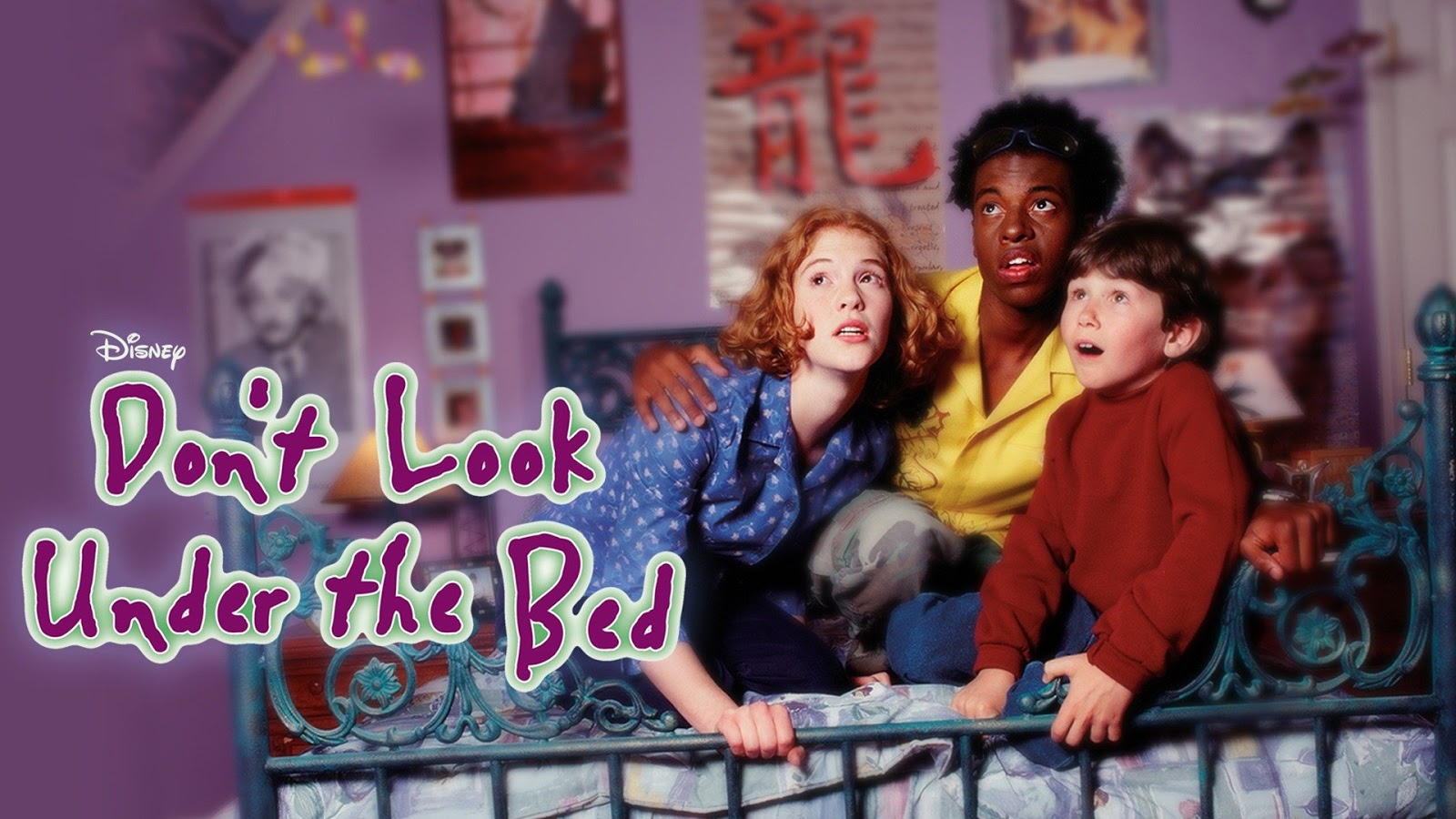
Disney Channel used to be different. It was weirder. If you grew up in the late nineties, you probably remember that specific brand of existential dread that hit right around 8:00 PM during Monstober. No movie captured that feeling better than the 1999 classic Don't Look Under the Bed. It wasn't just another "spooky" kids' movie; it was a psychological trip that actually got parents' groups riled up back in the day. Honestly, it’s a miracle it ever got made under the mouse ears banner.
The plot follows Frances Bacon McCausland, a girl who is way too smart for her own good and prides herself on being a total logic-driven skeptic. She's basically the Scully of Middleburg. But her world gets flipped upside down when a Boogeyman starts framing her for some pretty chaotic pranks around town—think spray-painting the school pool and "B"s appearing everywhere. To clear her name, she has to team up with Larry Houdini, an imaginary friend who is honestly more of a frantic, colorful mess than a superhero.
The Real Reason It Was Banned (Sort Of)
You might have heard the rumors that Disney "banned" the movie. That's a bit of an exaggeration, but it’s rooted in some truth. After it aired, Disney received a flood of complaints from parents who claimed the movie was way too dark and gave their kids legitimate nightmares. And, looking back, can you blame them? The Boogeyman’s design was genuinely unsettling. We’re talking about a creature with sharp teeth, rotting skin, and long, spindly fingers. It wasn't "cute-scary" like Monsters, Inc. It was "check-the-closet-twice-before-sleeping" scary.
Eventually, Disney Channel pulled it from their regular rotation. For years, it was basically the "lost" DCOM (Disney Channel Original Movie). It lived on in grainy VHS recordings and hushed conversations on early internet forums. It didn't resurface in a big way until the launch of Disney+, where a new generation finally got to see what the fuss was about.
What Most People Get Wrong About the Boogeyman Lore
A lot of people remember the jump scares, but they forget the actual mythology the movie established. It’s surprisingly deep. In this universe, a Boogeyman isn't just born; they are created. When a child stops believing in their imaginary friend too early or with too much "logic" and "maturity," that discarded friend transforms into a monster.
It’s a heartbreaking metaphor for the end of childhood.
Larry Houdini wasn't just a random sidekick. He was the imaginary friend of Frances’s younger brother, Darwin. The transformation process is shown in real-time, and it's body horror lite. Larry starts developing claws. His skin changes. He loses his memory and his kindness. It’s genuinely heavy stuff for a movie that was sandwiched between Even Stevens promos.
Why the Casting Worked So Well
Erin Chambers played Frances with a level of grit you didn't usually see in DCOM leads. She wasn't the "girl next door" archetype. She was frustrated, intellectual, and a little cold. This made her eventual acceptance of the supernatural feel earned. Then you have Ty Hodges as Larry. His performance is manic, joyful, and eventually, tragic. He carries the emotional weight of the film on his shoulders.
Special shoutout to Steve Valentine, who played the main Boogeyman. Valentine has this incredible ability to be both theatrical and menacing. If you recognize him, it’s probably from Crossing Jordan or his various magic specials. He brought a Shakespearean level of drama to a guy living under a bed.
The Darker Themes Disney Usually Avoids
Don't Look Under the Bed deals with the fear of growing up in a way that feels raw. Frances isn't just fighting a monster; she’s fighting her own desire to be an adult. She forced herself to grow up too fast because her brother was sick with leukemia.
Wait. You forgot about that part, didn't you?
Yeah, the movie explicitly mentions that Darwin had cancer. Frances became a "person of logic" as a defense mechanism against the randomness of illness. The Boogeyman is essentially a manifestation of the chaos she can't control. When the movie reveals that the Boogeyman was actually Frances’s own former imaginary friend, Zoe, it hits like a ton of bricks. Zoe became a monster because Frances abandoned her when things got "serious" in her real life.
Directing the Darkness
The film was directed by Kenneth Johnson. If that name sounds familiar to sci-fi nerds, it’s because he created the original V series and The Incredible Hulk show. He knew how to handle genre material. He didn't treat it like a "kids' movie." He shot it like a thriller. The lighting is moody, the shadows are long, and the camera angles are often Dutch tilts that make everything feel slightly off-balance.
There are scenes in the "Boogeyworld" (the dimension under the bed) that look like they were inspired by Beetlejuice or The Nightmare Before Christmas. It's a surrealist landscape of discarded toys and distorted reality.
Why It Still Holds Up in 2026
Even with the dated CGI—and let’s be honest, the "logic" computer effects are very 1999—the practical makeup holds up incredibly well. The Boogeyman looks better than many modern CGI monsters because there's a physical presence there. There's weight to the costumes.
Moreover, the "imaginary friend" trope has been done to death, but rarely with this much bite. Movies like IF or Foster's Home for Imaginary Friends take a much lighter approach. Don't Look Under the Bed is the only one that suggests our childhood wonders can turn into our adult nightmares if we don't treat them with respect.
Cultural Legacy and the "DCOM" Renaissance
For a long time, Disney tried to play it safe with musical comedies like High School Musical or Camp Rock. There’s nothing wrong with those, but they lacked the experimental edge of the late nineties. Recently, there’s been a shift. Fans are clamoring for that weirdness again. You can see the DNA of this movie in modern hits like Gravity Falls.
The movie also serves as a time capsule for 90s fashion and tech. The oversized sweaters, the chunky monitors, the specific way the "cool kids" talked—it’s pure nostalgia. But the core story about the fear of losing your imagination is timeless.
Critical Reception vs. Fan Reality
If you look at Rotten Tomatoes or IMDb, the scores are decent but not legendary. But critics at the time weren't the target audience. The "legend" of this movie grew in school cafeterias and during sleepovers. It became a rite of passage. If you could sit through the scene where the Boogeyman pulls Frances under the bed, you were "tough."
Most modern reviews focus on the "trauma" it caused, but that's a badge of honor. Good horror—even for kids—should leave a mark. It should make the world feel a little bigger and more mysterious.
How to Revisit the Movie Today
If you're going to watch Don't Look Under the Bed now, you have to go into it with the right mindset. Don't expect a polished modern horror film. Expect a weird, ambitious, and slightly clunky piece of television history that dared to be different.
- Watch it on a big screen. The cinematography is surprisingly good and deserves more than a phone screen.
- Pay attention to Larry's "fading." The makeup changes subtly throughout the movie to show him losing his humanity. It’s a great detail.
- Look for the clues. The movie plants "B"s and other Boogeyman hints long before the big reveal.
- Acknowledge the stakes. Remember that this was a TV movie. For the budget they had, the world-building is top-tier.
The legacy of Frances McCausland and Larry Houdini isn't just about the scares. It’s about the fact that it’s okay to keep a bit of childhood wonder alive, even when the world gets complicated and scary. Logic is great for solving math problems, but it’s not very good at keeping the monsters away.
To get the most out of a rewatch, track down the original 1999 promos on YouTube before hitting play on Disney+. It sets the era-appropriate mood. Then, look closely at the background of the Boogeyworld scenes; you'll spot dozens of Easter eggs involving 90s toys that were "forgotten" by their owners. Finally, compare the makeup design of the Boogeyman to the concept art found in old Cinefantastique magazines to see how much they had to tone down for the final cut.