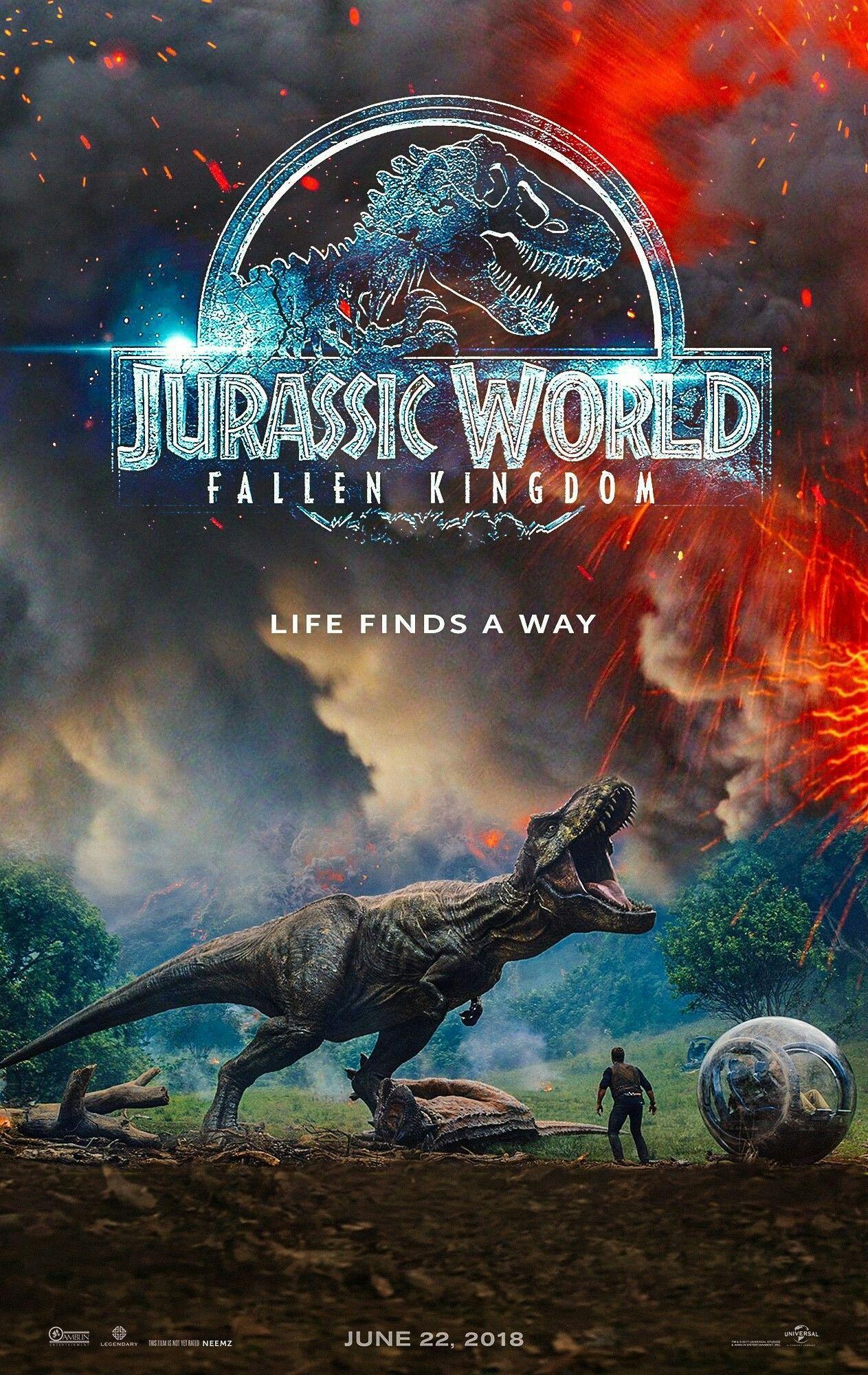
Honestly, the internet was pretty mean to this movie when it first came out. People wanted another Jurassic Park—that slow-burn, Spielbergian wonder where kids hide behind kitchen counters. Instead, J.A. Bayona gave us a gothic horror film disguised as a summer blockbuster. If you’ve been on the fence or just haven't caught up with the franchise lately, you should watch Jurassic World Fallen Kingdom with fresh eyes because it’s easily the weirdest, darkest entry in the entire series.
It’s a movie of two halves. One half is a loud, chaotic volcano escape. The other is a creepy "haunted house" flick where the ghost is a genetically modified dinosaur.
Most people remember the marketing. It promised a rescue mission to Isla Nublar. They showed us Chris Pratt running from a wall of ash and Bryce Dallas Howard looking stressed in a tracking van. But that’s barely the first forty minutes. The real meat of the story happens in a rainy basement in Northern California. It's jarring. It’s strange. And it's actually way more interesting than the "theme park gone wrong" trope we've seen five times already.
The Visual Shift That Changed Everything
When J.A. Bayona took the reins from Colin Trevorrow, the DNA of the franchise mutated. Bayona is the guy who did The Orphanage and A Monster Calls. He doesn't do "bright and sunny." He does shadows. He does long, lingering shots of claws scraping against floorboards.
Watching the Indoraptor stalk through a child’s bedroom is genuinely unsettling. It’s not just a dinosaur movie at that point; it’s a slasher film. The way the lighting hits the creature's scales—mostly using practical effects and animatronics from Neal Scanlan’s team—makes it feel heavy. Real. You can almost smell the wet scales. This wasn't just another CGI-heavy slog. The production actually built more animatronic dinosaurs for this film than for any of the previous Jurassic World installments.
That shift matters. It gives the film a tactile quality that the 2015 original lacked. If you're going to watch Jurassic World Fallen Kingdom, pay attention to the Lockwood Estate sequences. The cinematography by Óscar Faura is moody as hell. It’s all deep blues, harsh ambers, and silhouettes. It feels like a Hammer Horror film.
Why the "Stupid" Decisions Actually Make Sense
One of the biggest gripes fans had was the characters making seemingly "dumb" choices. Why go back to a volcano? Why try to sell dinosaurs at an auction?
Here’s the thing: greed is the point.
The film isn't trying to be a hard science documentary. It’s a critique of corporate overreach and the hubris of man. Jeff Goldblum’s Ian Malcolm returns—briefly, but effectively—to remind us that "life cannot be contained." The auction scene in the basement is purposely grotesque. Seeing billionaires bid on a Stygimoloch like it’s a piece of fine art is supposed to make you feel gross. It highlights the commodification of nature, which has been the core theme since Michael Crichton first sat down to write the original book in the late 80s.
People forget that Crichton’s novels were cynical. They were mean. Fallen Kingdom captures that mean-spiritedness better than almost any other sequel. It’s not "fun" to see a Brachiosaurus get engulfed by smoke on a pier while the boat pulls away. It’s traumatic. But that trauma serves a purpose. It forces the audience to stop looking at these creatures as movie monsters and start seeing them as victims of human meddling.
The Maisie Lockwood Twist and the Future of the Franchise
Let’s talk about the girl.
The reveal that Maisie is a clone—not just a granddaughter, but a literal genetic copy of Benjamin Lockwood’s deceased daughter—split the fanbase right down the middle. Some thought it was a bridge too far. But if you can accept a park full of resurrected lizards, why is a cloned human such a leap?
It bridges the gap between "dino movie" and "sci-fi ethics." It raises the stakes for the finale. When Maisie presses that button to release the dinosaurs into the California woods, she isn't doing it because she’s a brat. She’s doing it because she recognizes that she and the dinosaurs are the same. They are all "manufactured" lives that the world wants to dispose of.
That ending changed the status quo forever. For thirty years, the dinosaurs were trapped on islands. Now, they're in our backyards. That’s a massive narrative pivot that the subsequent film, Dominion, had to grapple with.
Practical Advice for Your Re-Watch
If you’re planning to watch Jurassic World Fallen Kingdom this weekend, don't go in expecting a lighthearted romp.
- Check the Sound System: This film won several awards for sound editing and mixing. The roar of the T-Rex and the clicking of the Indoraptor’s talons are designed for a high-end setup or good headphones.
- Watch the Pacing: The transition from the island to the mansion is abrupt. Accept it. Treat it like two different short stories connected by the same characters.
- Look for the Easter Eggs: There are several nods to the original 1993 film, specifically in the way the kitchen scene is mirrored during the climax at the estate.
The movie isn't perfect. The dialogue can be clunky, and Justice Smith’s character spends a bit too much time screaming. But as a piece of visual storytelling and a bold move to break the "island" loop, it’s underrated. It takes risks. It kills off the setting of the original trilogy in a literal explosion of fire. That takes guts for a multi-billion dollar franchise.
Instead of looking for reasons to nitpick the science, look at the atmosphere. Look at the way Bayona uses shadows to build dread. It's a much more rewarding experience when you treat it as a gothic fable rather than a straightforward action movie.
To get the most out of it, try to find a 4K HDR stream. The contrast between the lava and the dark jungles, and later the rain-slicked mansion roof, is where the movie really shines. It’s one of the best-looking blockbusters of the last decade, regardless of how you feel about the plot.
Once the credits roll, the state of the world has shifted. The "Jurassic World" is no longer a park; it's the planet. That's a haunting note to end on, and it's exactly why this middle chapter deserves more respect than it gets. Go back, hit play, and pay attention to the smaller moments. You might find you like it a lot more the second time around.